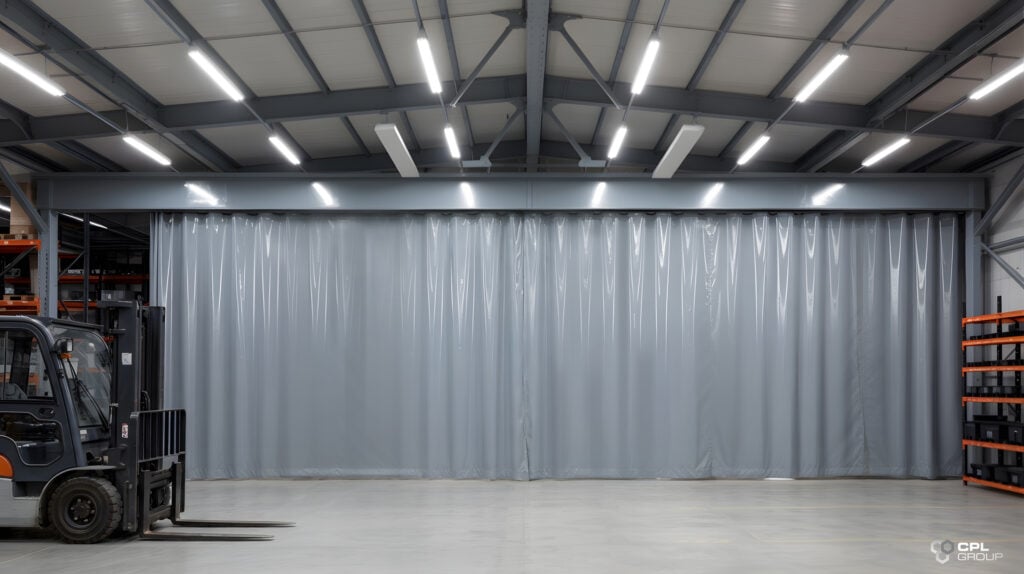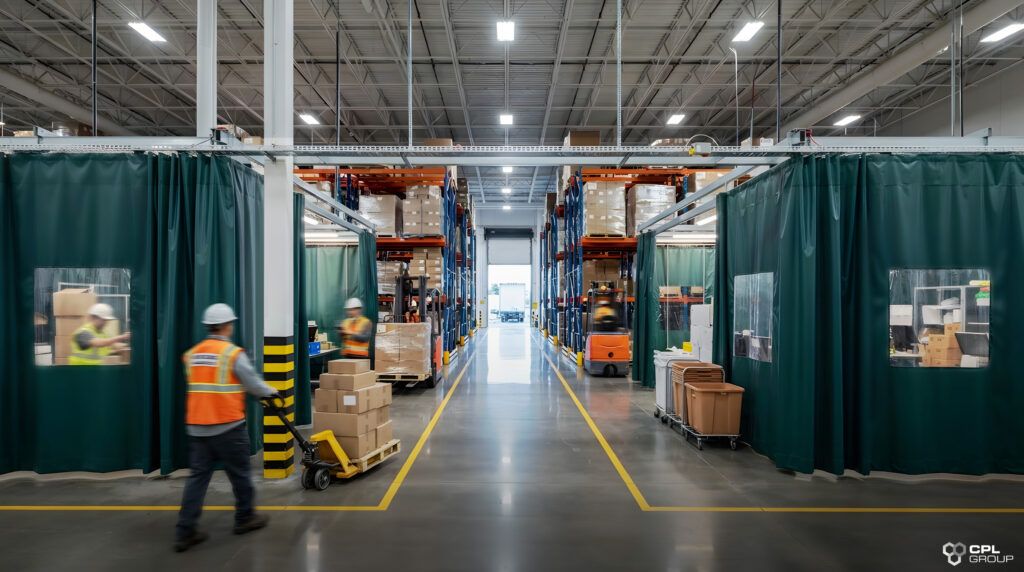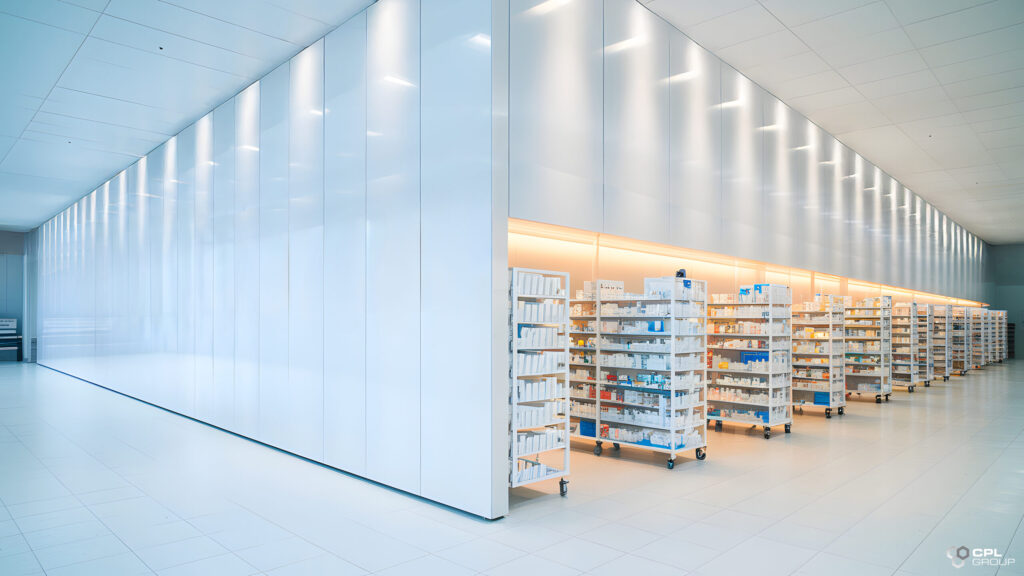

A permanent partition wall in an Australian distribution centre isn’t just a construction cost. It’s an approval process, a contractor booking that has to work around an operating facility, and a section of floor that’s reduced capacity or fully out of action for however long the build takes, which is rarely as short as the original quote suggested. For operations managers running a facility that can’t afford downtime, that’s often the real objection to a permanent build, more than the dollar figure on the quote.
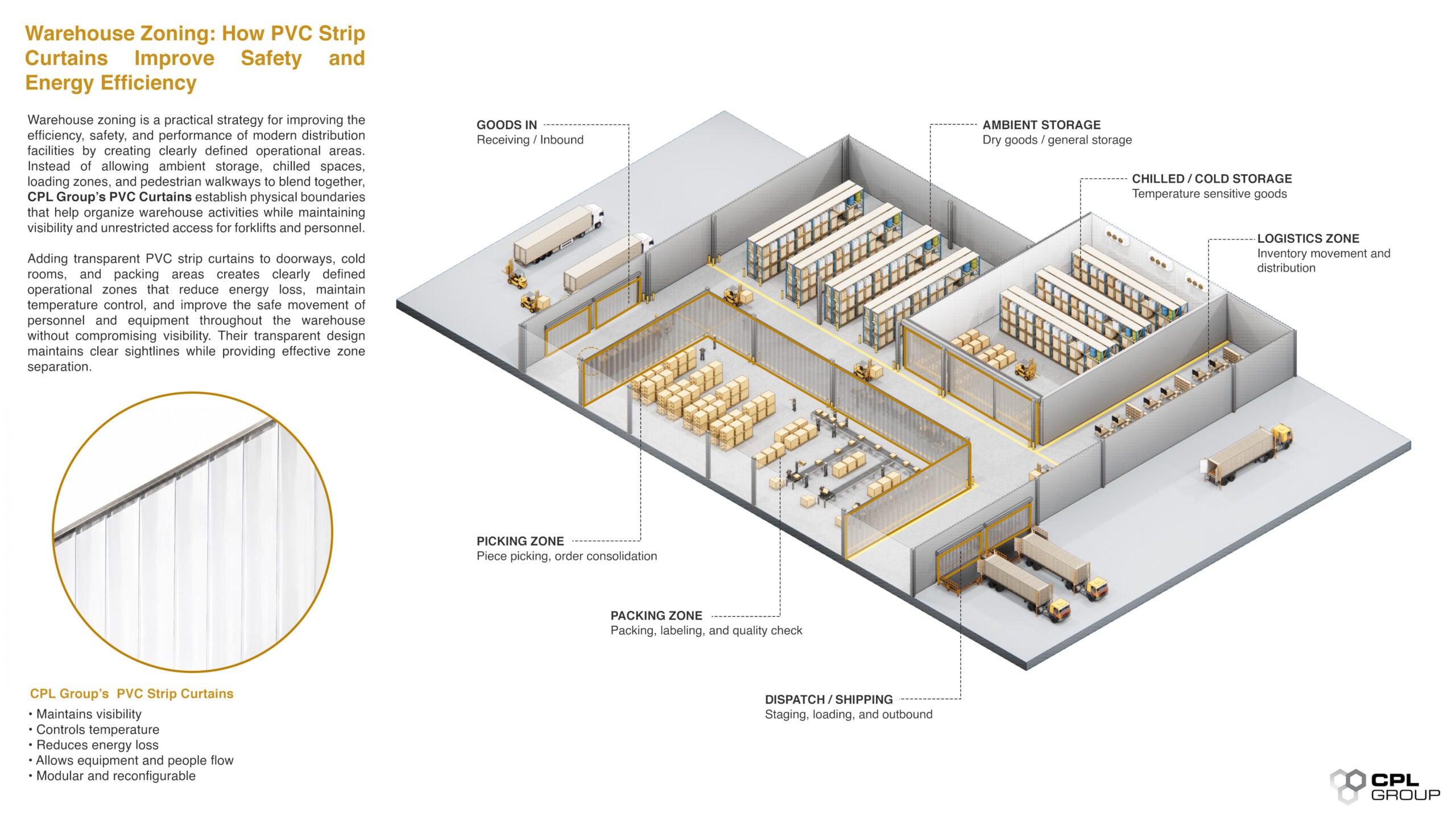
PVC curtain systems solve the same zoning problem without most of that overhead, and they hold up in conditions that push standard partition materials harder than most specifications account for.
What a permanent partition actually costs in approval time and downtime
Depending on the state and the nature of the work, a structural or fire-rated internal partition can trigger a building approval process that adds weeks before a contractor even arrives on site. Once work starts, a facility is typically looking at two to six weeks of disruption to that section of the floor, longer if the wall interacts with existing services, racking, or fire systems. For a distribution centre running close to capacity, that downtime has its own cost that rarely makes it into the original project budget.
Approval requirements also aren’t uniform across the country, which catches out facility teams managing sites in more than one state. A partition that’s a straightforward internal application in one jurisdiction can require additional sign-off in another, particularly where the building’s original certification specified a particular fire or structural rating for that zone. Facility managers who’ve only ever run this process in one state sometimes assume the same timeline will hold everywhere, and then find the project running weeks longer than planned once a second state’s requirements come into play.
Heat load at zone boundaries across Australian climate zones
A distribution centre in Townsville and one in Hobart are managing fundamentally different heat loads, and a curtain specification that works in one climate zone isn’t automatically right for the other. Facilities in northern and inland regions need material and sealing specified for sustained high ambient temperatures at the dock and yard interface, where the differential against a chilled internal zone can be extreme for large parts of the year. Southern facilities deal with a smaller average differential but sharper seasonal swings. Either way, the boundary between zones is where that heat load actually gets managed or lost, not at the compressor.
Installation timeline comparison: stud wall vs PVC curtain system
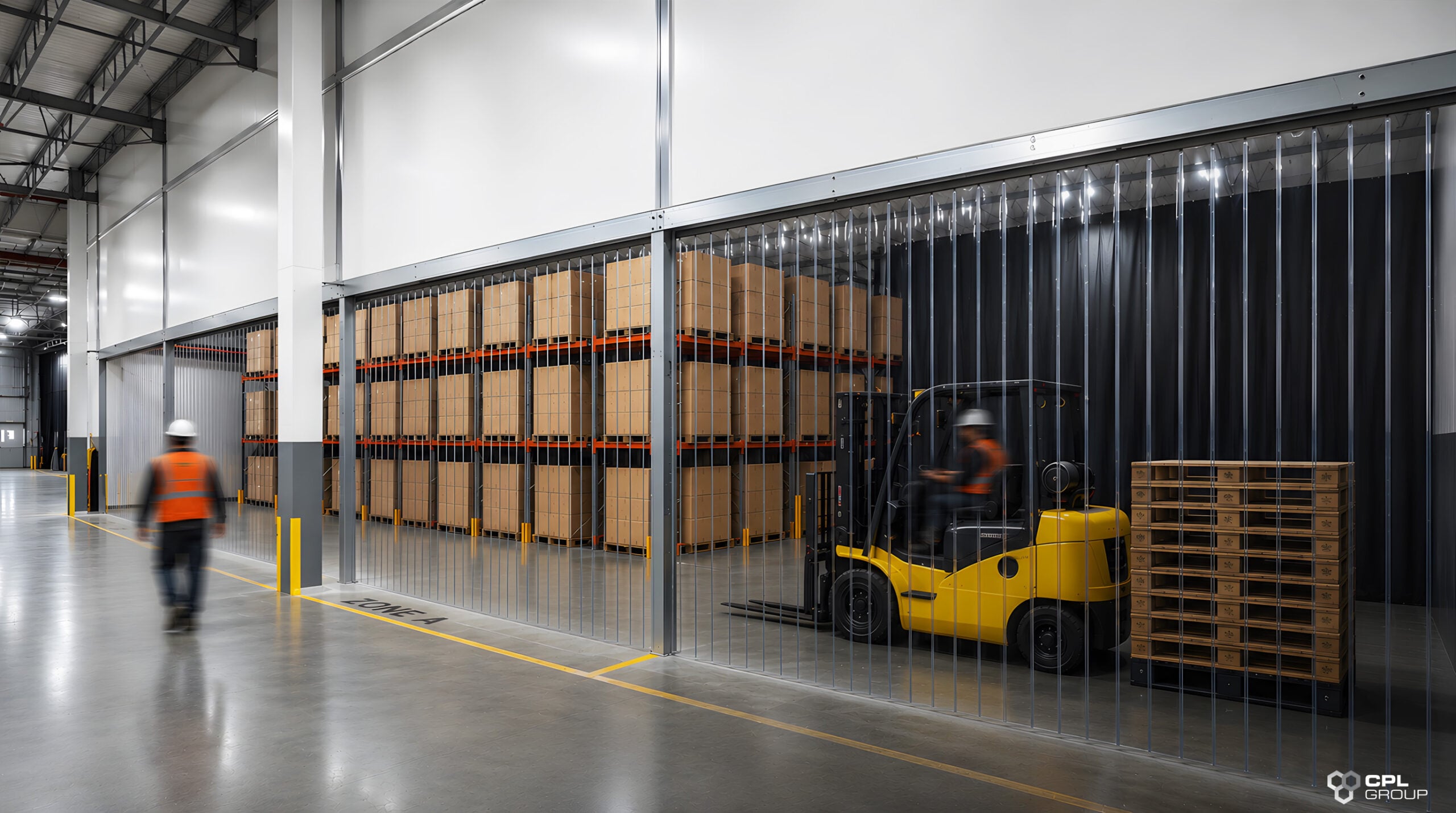
Where a stud or insulated partition wall runs to weeks, a PVC curtain system at a single boundary typically installs in a day to a few days depending on span and site access, without wet trades or an extended shutdown of the surrounding area. For a facility team that’s been told “two weeks minimum” for a permanent build and doesn’t have two weeks to give, that gap is usually decisive on its own.
Reconfiguration cost when the layout changes again in twelve months
Distribution centre layouts don’t stay fixed. Automation retrofits, new client contracts with different storage requirements, and seasonal volume all push facility managers to reconsider zoning more often than the original building design anticipated. A permanent wall built for last year’s layout is either left in place as dead weight or demolished and rebuilt, both expensive outcomes. A modular curtain system relocates or resizes without that sunk cost, which matters more the more often a facility’s requirements actually change.
Material selection for high-UV, high-heat dock environments
Dock areas exposed to direct sun and high UV, common across most of Australia’s distribution network, need PVC material rated for UV stability, not standard internal-grade product that degrades and becomes brittle faster than expected in that environment. This is one of the more common specification mistakes: choosing a curtain rated for internal use only and installing it at an external-facing dock boundary, then replacing it within a year or two when it should have lasted considerably longer.
A short checklist for facility managers evaluating both options
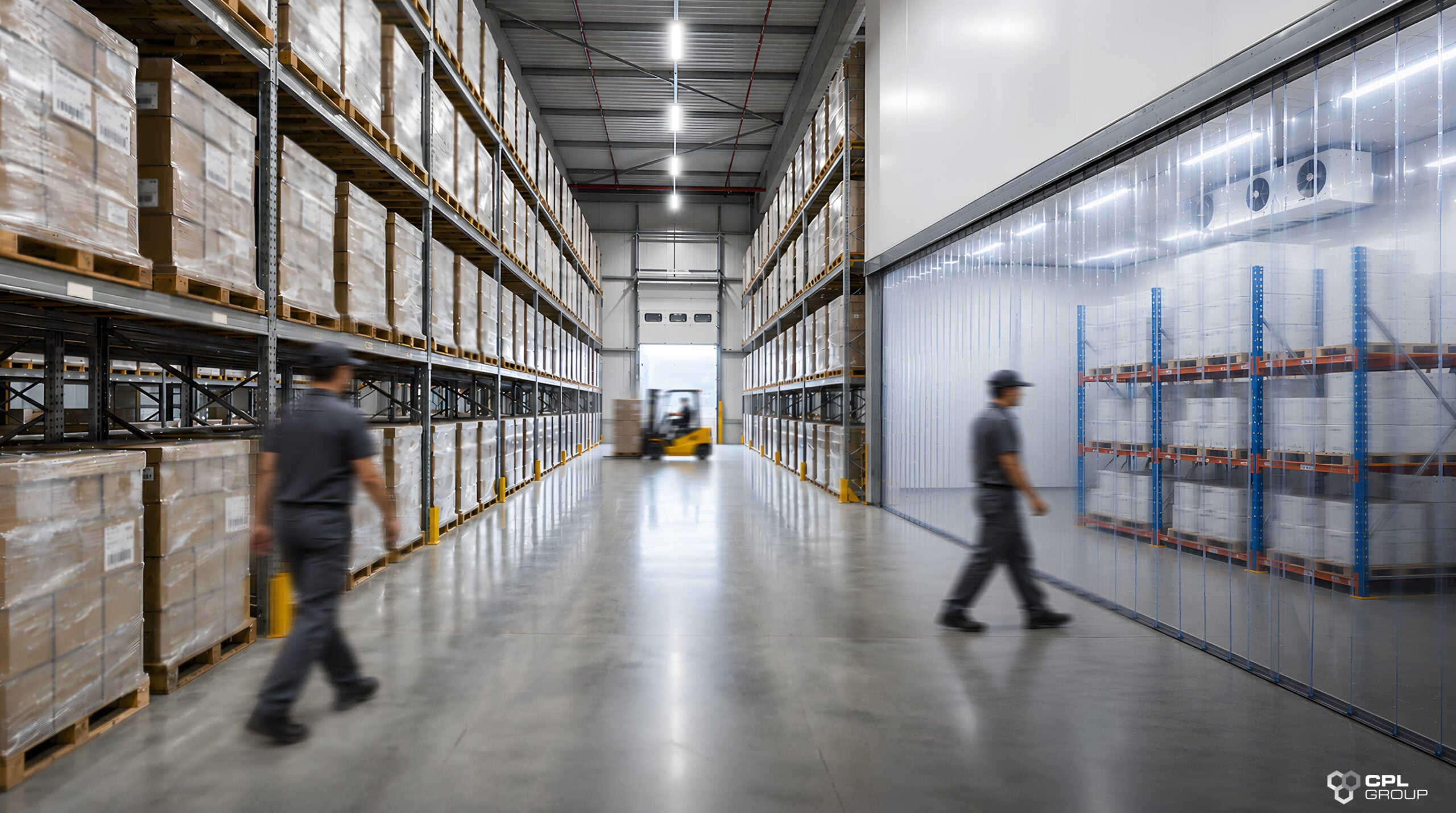
Before committing to either approach, check: how long can this section of the floor realistically be out of action, does the wall need to meet a specific fire rating that only a permanent structure can provide, how likely is this layout to change again within two to three years, and what’s the actual heat and UV exposure at this specific boundary versus the rest of the facility.
It’s also worth checking who’s actually going to live with the decision. A facility manager evaluating a boundary that a 3PL client’s contract requires to stay fixed for a multi-year term is in a genuinely different position to one zoning a boundary that exists because of this season’s volume. The first can justify a permanent build against a long, predictable contract life. The second is usually better served by a system that can move when the contract, the client, or the product mix changes, which in distribution centre operations tends to happen more often than the original facility design accounted for.
Frequently Asked Questions
Do PVC curtain systems need council or building approval in Australia?
Generally no, since they’re non-structural and don’t typically fall under the same approval requirements as a permanent partition wall. Requirements can vary by state and by whether the boundary in question needs to meet a specific fire separation standard, so it’s worth confirming with your local authority for anything beyond a straightforward internal zoning application.
How long does a PVC curtain installation take compared to a permanent wall?
A single-boundary curtain installation typically takes a day to a few days depending on span and access. A permanent stud or insulated partition wall, including any required approvals, usually runs two to six weeks, and often longer if it interacts with existing services or fire systems.
Can PVC curtains handle Australia’s climate extremes?
Yes, provided the material is specified correctly for the specific location and boundary. UV-stable, heat-rated material is essential for dock and yard-facing boundaries in northern and inland regions, while standard internal-grade material is adequate for boundaries that don’t face direct sun or extreme heat exposure.
Is a modular curtain system a good long-term solution, or only a temporary fix?
It depends on the facility’s needs. For a boundary that’s genuinely fixed for the long term with no expected layout change, a permanent wall can still make sense. For most active distribution centres, where layouts shift with automation, contracts, and seasonal volume, a modular system that can be reconfigured without demolition tends to deliver better long-term value.
Choose a Smarter Warehouse Separation Solution
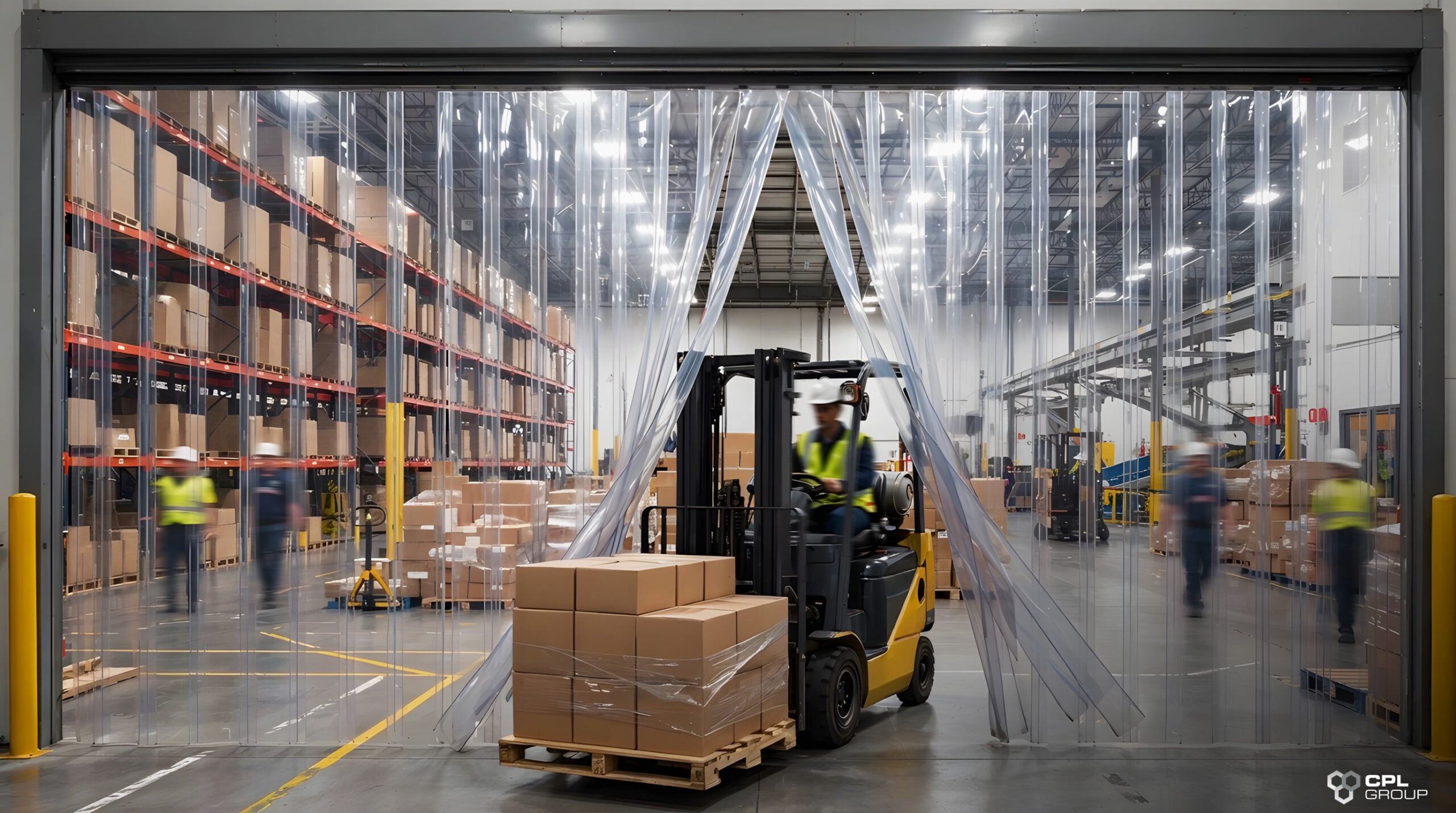
As Australian distribution centres continue to adapt to changing operational demands, flexibility is becoming just as important as performance. Investing in modular PVC curtains in Australia allows businesses to create efficient warehouse zones, reduce installation downtime, and adapt layouts as operations evolve. With the right solution in place, facilities can improve productivity, support temperature control, and avoid the long-term costs associated with permanent structural changes.
Ready to improve your warehouse with a more flexible solution? Contact CPL Group today to discuss tailored modular PVC curtains in Australia that enhance operational efficiency, minimise disruption, and support your distribution centre’s long-term success.