
Contact

Become a Distributor

Free
Consultation

Solution Finder

Request Product Brochure

x

Get a Quote

Industrial Solutions for Anywhere (Land, Water & Beyond)

From manufacturing floors and cold storage facilities to marine worksites and environmental protection projects, CPL Group delivers engineered containment, partitioning, and compliance solutions built for real-world performance. Whether your operations demand temperature control, contamination prevention, spill response, or workspace optimization, we provide durable systems that protect people, products, and environments.

Tell us what you're working on, and CPL Group will deliver a tailored solution with a no-obligation quote — practical, compliant, and built to last.

    x

    Contact Us

    Let’s Talk

    You can trust CPL Group—contact us today for the products you need and the service you deserve, delivered with proven expertise.

      x

      Contact Us

      Become a CPL Distributor

      Our PVC premium products are sold around the world, so find out more about what’s involved in becoming a CPL distributor.

      Connect with us to find out more.

        x

        Talk to Us

        We invite you to get in touch with our team to learn more about our products or book a consultation to discuss your specific requirements. Our experts are ready to assist you and provide a free, no-obligation consultation tailored to your needs.

          x

          1
          2
          3
          4
          5
          6
          7
          8

            Find Your Perfect Solution


            Answer a few quick questions and we'll match you with the best CPL Group products.


            Please note: Our solutions are designed exclusively for commercial applications and are not available for residential use.

            Get Started

            When do you need your solution in place?


            Select one:

            When do you need your solution in place?

            What challenge are you looking to address?


            Select the closest match:

            What challenge are you looking to address?

            Where will this solution be implemented?

            Indoor, outdoor, or a mix of both?

            Where will this solution be implemented?

            What is the main source of the challenge?


            What is the main source of the challenge?

            What outcome level are you aiming for?


            Select one:

            What outcome level are you aiming for?

            Do you have special needs or preferences?

            Select all that apply


            Do you have special needs or preferences?

            Which industry best describes your project?

            Manufacturing / IndustrialLogistics / WarehousingFood & BeverageOil, Gas & WaterAviationAutomotivePharmaceuticals / LaboratoriesOther

            Which industry best describes your project?

            Get Your Results Instantly

            Enter your details to view your personalized CPL Group recommendations.

            Preferred Method of Contact: *

            EmailPhone
            I'd like a copy of my results sent to my inbox.

            CPL Group Logo

            Search

            CPL Group Logo
            ×

            REQUEST BROCHURE

            CPL Brochure

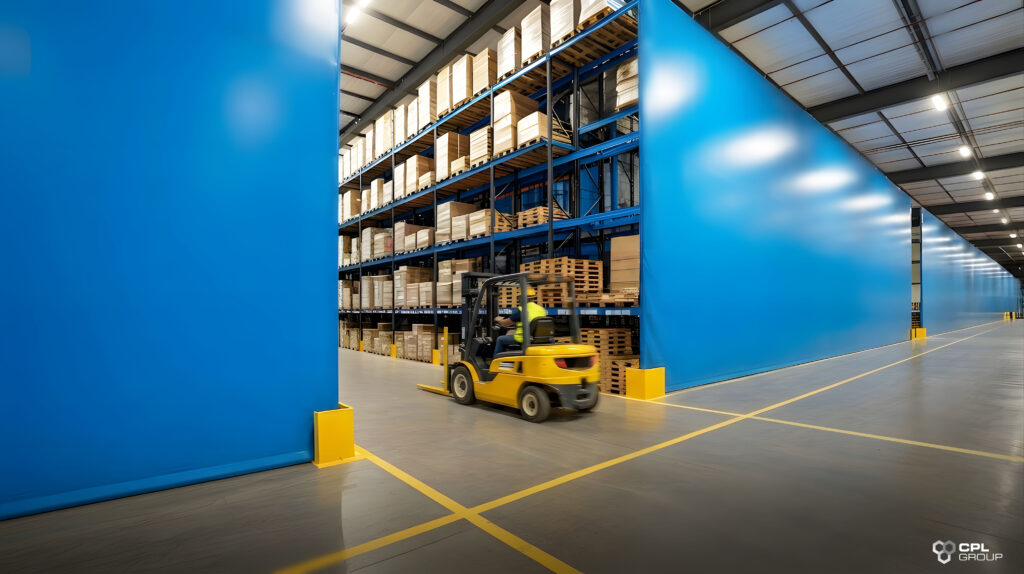
              Flexible Warehouse Layout design improves safety, efficiency, and scalability by using zoning strategies, PVC strip curtains, industrial curtains, and modular divider systems.


              How to Design a Flexible Warehouse Layout That Actually Works
              Flexible Warehouse Layout Design | How to Design a Flexible Warehouse Layout That Actually Works | CPL Group


              Warehouses Are Under Pressure to Do More — Faster

              Modern logistics facilities are expected to handle higher throughput, integrate automation, and maintain strict safety standards — all while adapting to constant operational change.

              What worked five years ago is no longer enough.

              Warehouse layouts must now support:

              • Dynamic workflows
              • Increasing SKU volumes
              • Automation and robotics integration
              • Safer traffic management

              And yet, many facilities are still built around fixed layouts that limit change.


              Why Most Warehouse Layouts Fail Over Time

              Warehouse layouts are typically designed around immediate operational requirements.

              At the time, they perform well.

              But as operations evolve — through automation, increased throughput, or workflow changes — those same layouts begin to create friction.

              Common issues include:

              • Congested traffic flow
              • Unsafe interaction between people and machinery
              • Inefficient zoning between processes
              • Limited scalability for future growth

              The underlying issue is clear:

              Most warehouses are designed for today — not for change


              What Is a Flexible Warehouse Layout?
              Flexible Warehouse Layout Design | What Is a Flexible Warehouse Layout? | CPL Group


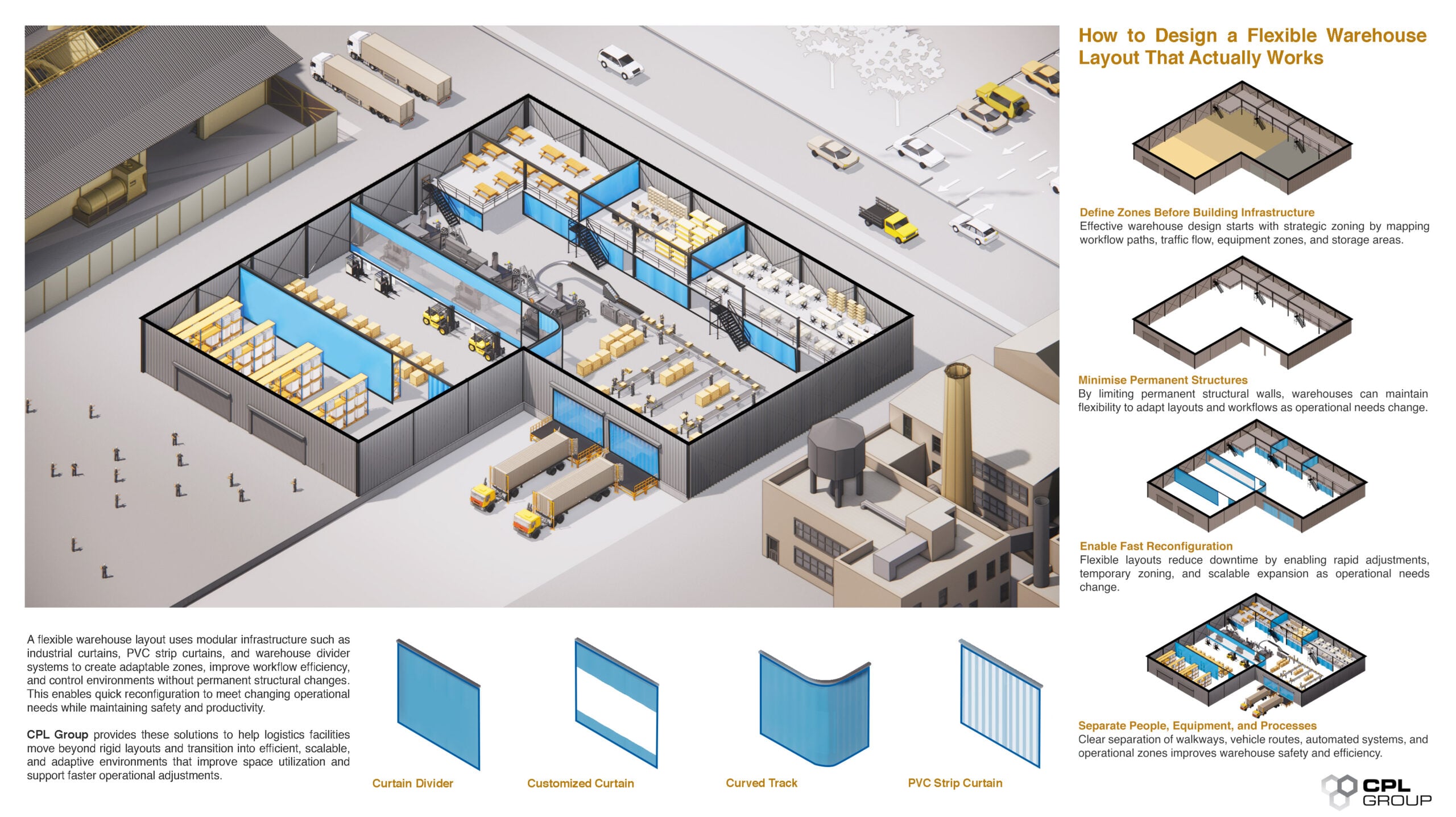
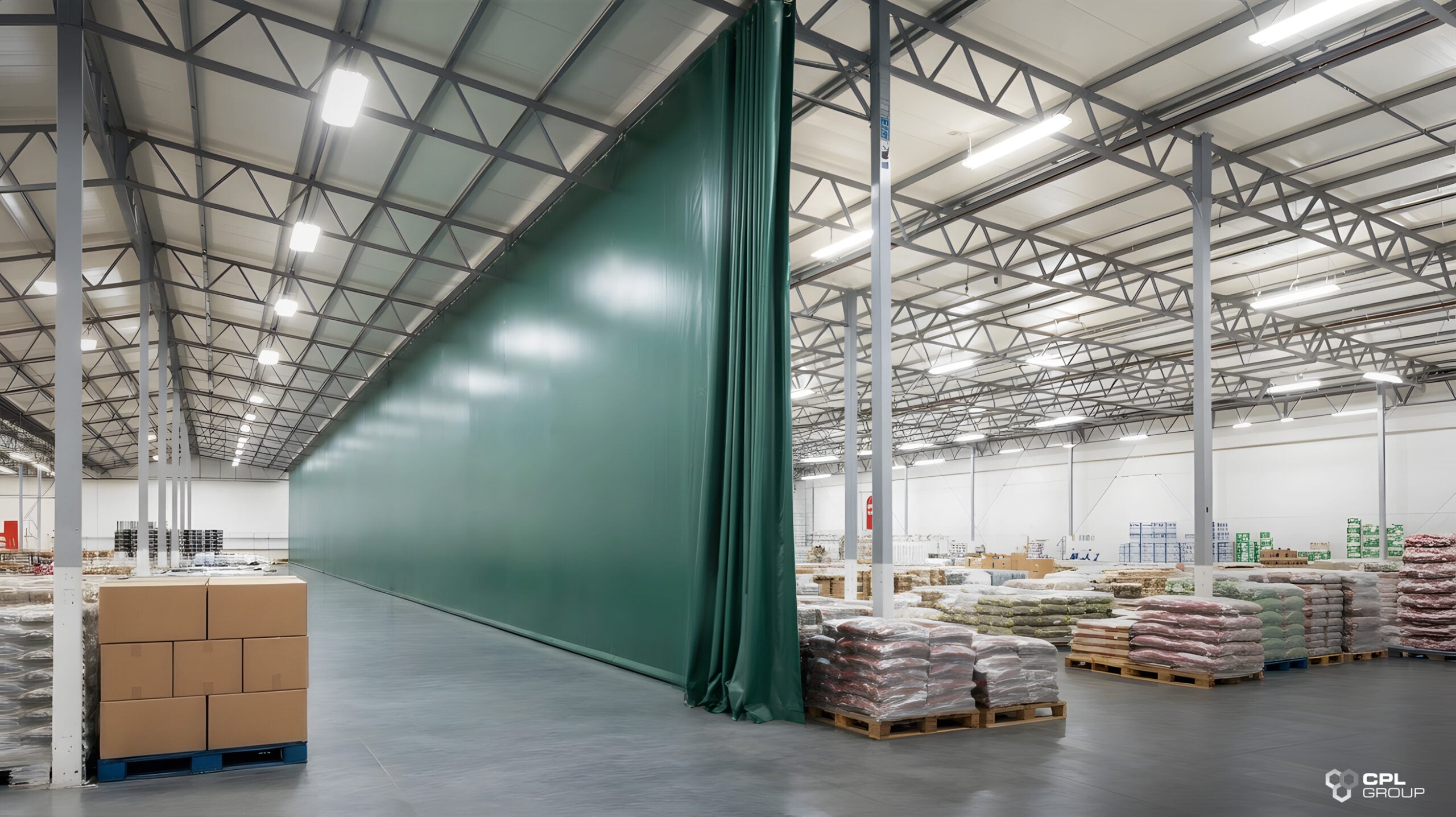
              A flexible warehouse layout is a system designed to adapt to changing operations using modular infrastructure such as industrial curtains, PVC strip curtains, and divider systems. It allows warehouse zones, workflows, and environments to be reconfigured without permanent structural changes or costly construction.


              The 5 Principles of Flexible Warehouse Layout Design

              1. Define Zones Before Building Infrastructure

              Effective warehouse design starts with zoning — not construction.

              Operators should map:

              • Workflow paths
              • High-traffic movement
              • Equipment zones
              • Storage and picking areas

              This ensures infrastructure supports operations — not the other way around.

              2. Separate People, Equipment, and Processes

              Clear separation is critical for both safety and efficiency.

              Warehouses should establish distinct zones for:

              • Pedestrian walkways
              • Forklift and vehicle routes
              • Automated systems
              • Operational processes

              This reduces risk while improving overall flow.

              3. Design for Change, Not Perfection

              Warehouse operations will evolve — often rapidly.

              Layouts should be built with the expectation that:

              • Throughput will increase
              • Processes will change
              • Automation will expand

              Designing for flexibility ensures facilities remain efficient over time.

              4. Minimise Permanent Structures

              Permanent construction limits adaptability.

              While structural walls may be necessary in some areas, over-reliance on fixed infrastructure creates long-term constraints.

              Modular systems provide a more adaptable alternative.

              5. Enable Fast Reconfiguration

              Operational changes should not require extensive downtime.

              Flexible layouts allow:

              • Rapid layout adjustments
              • Temporary or seasonal zoning
              • Scalable expansion as demand grows

              This enables facilities to respond quickly to changing requirements.


              Where Flexible Infrastructure Fits In
              Flexible Warehouse Layout Design | Where Flexible Infrastructure Fits In | CPL Group

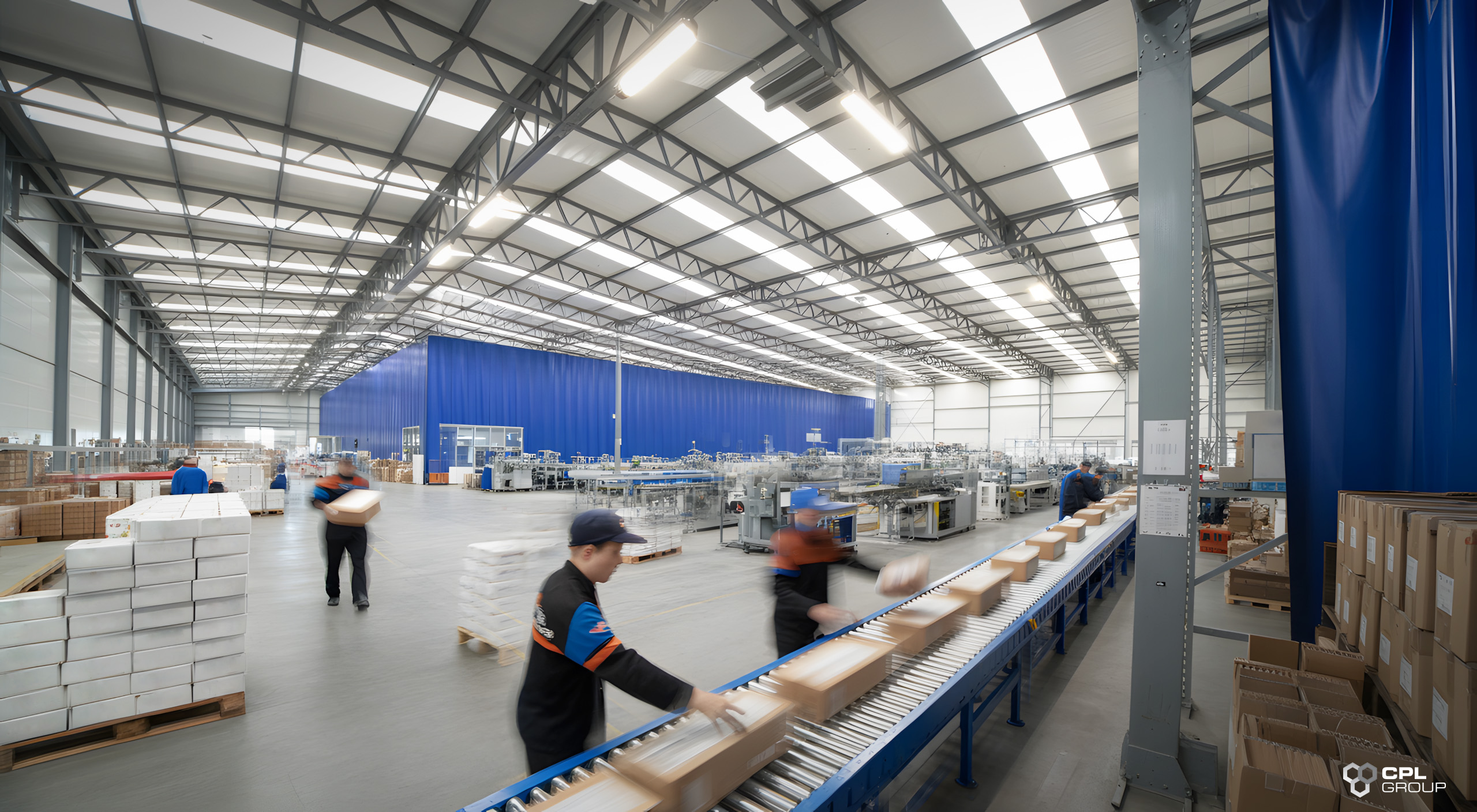
              Flexible infrastructure enables warehouse design principles to be implemented in practice.

              Instead of relying on permanent construction, facilities can use:

              These solutions provide:

              • Fast installation with minimal disruption
              • Lower upfront and lifecycle costs
              • Easy reconfiguration as operations evolve
              • Improved environmental control (dust, temperature, airflow)


              Common Warehouse Design Mistakes to Avoid
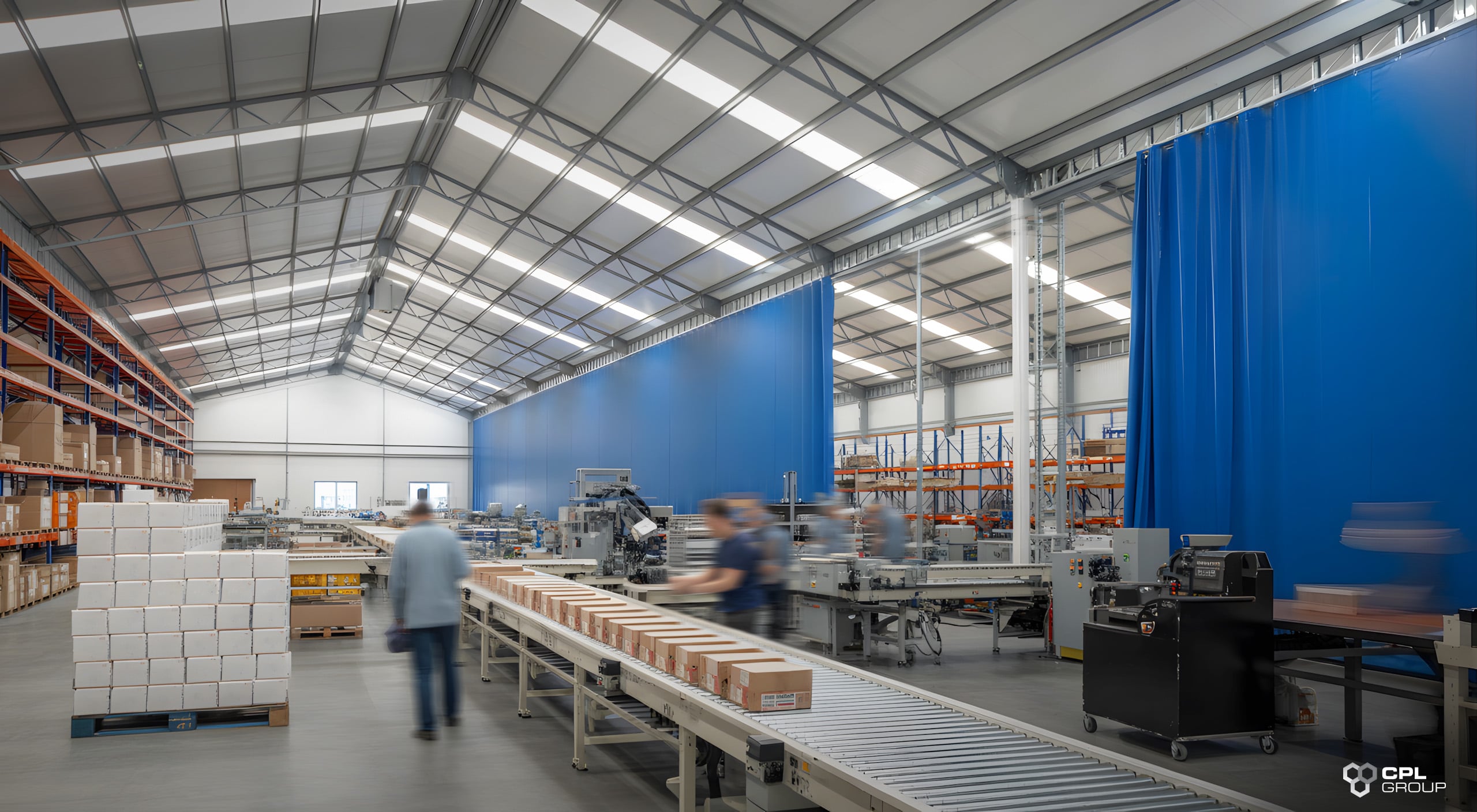
              Flexible Warehouse Layout Design | Common Warehouse Design Mistakes to Avoid | CPL Group

              Even well-planned warehouses can face performance issues due to design limitations.

              Common mistakes include:

              Over-reliance on fixed walls

              Restricts flexibility and increases future modification costs

              Poor traffic planning

              Leads to congestion and safety risks

              Lack of environmental separation

              Impacts efficiency, safety, and operational control

              Ignoring future scalability

              Limits growth and creates costly redesign requirements

              Avoiding these issues is critical to long-term performance.


              How CPL Supports Flexible Warehouse Layout Design

              CPL provides infrastructure solutions that help logistics facilities transition from static layouts to adaptive environments.

              These include:

              • Industrial curtain systems for zoning and large-area separation
              • PVC strip curtains for doorways, traffic openings, and environmental control
              • Warehouse divider systems for modular and scalable space partitioning

              CPL solutions are designed to:

              • Minimise operational disruption
              • Support fast installation
              • Improve environmental efficiency
              • Enable long-term adaptability


              Designing Warehouses for Long-Term Performance
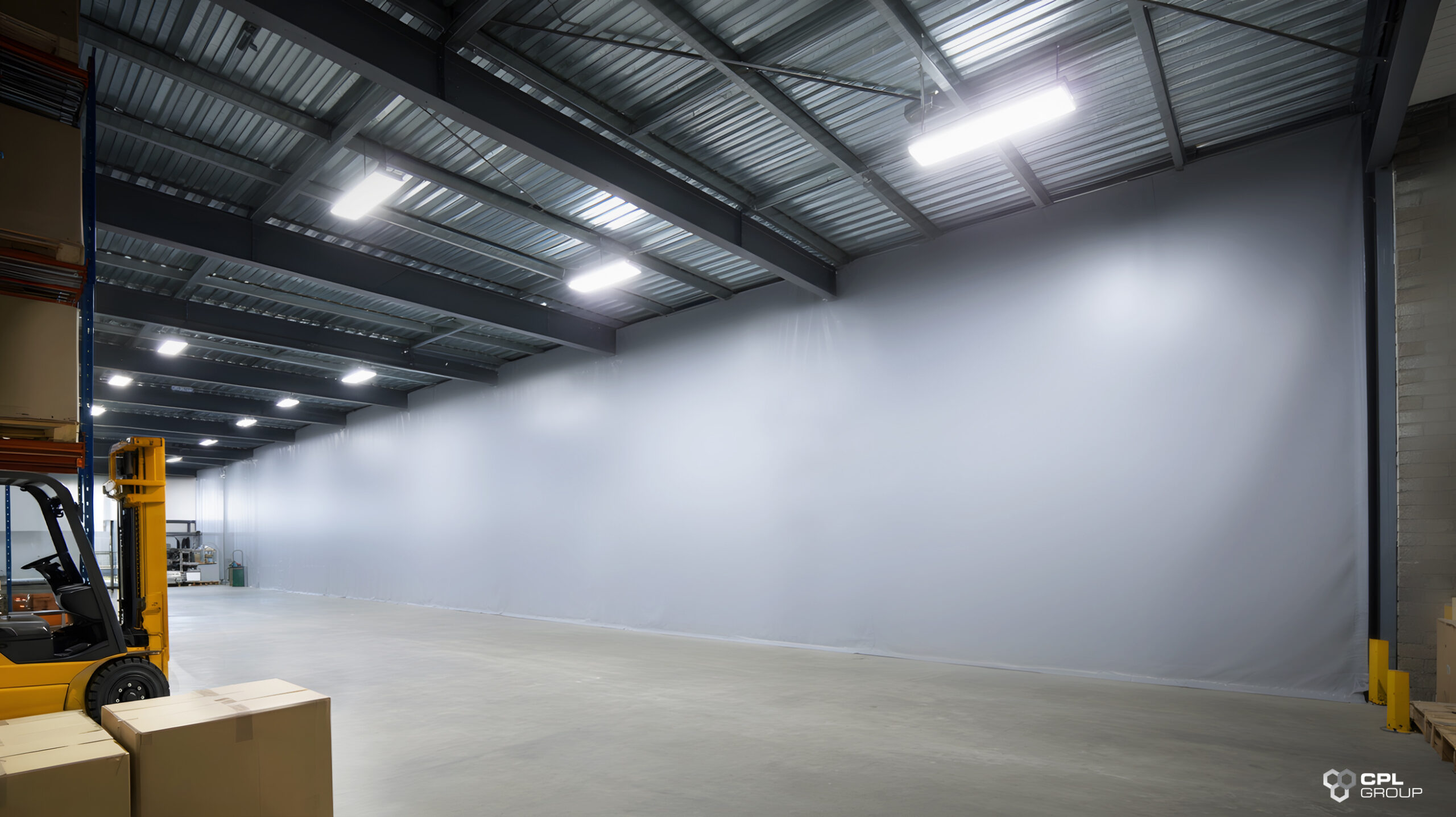
              Flexible Warehouse Layout Design | Designing Warehouses for Long-Term Performance | CPL Group

              The most effective warehouse layouts are not just efficient today — they remain effective as operations evolve.

              Facilities that prioritise flexibility are better positioned to:

              • Integrate new technologies
              • Improve safety outcomes
              • Optimise workflows
              • Scale with demand


              Conclusion

              Warehouse design is no longer about creating a fixed environment.

              It is about enabling continuous change.
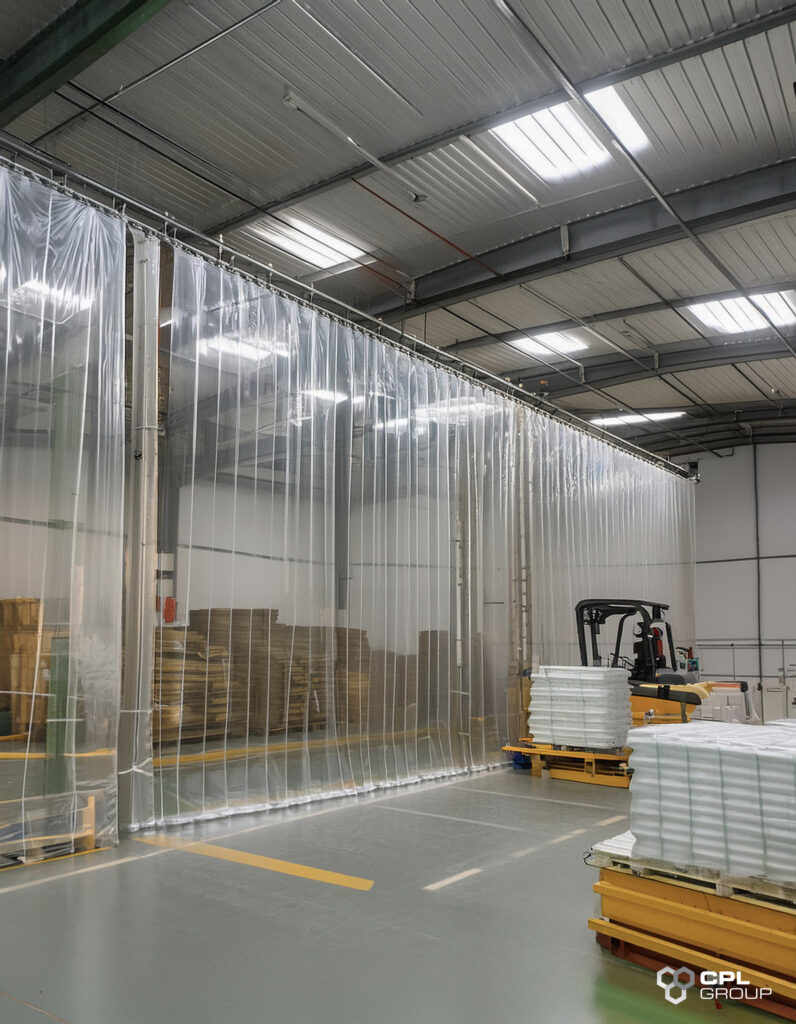
              Flexibility is no longer optional — it is a core operational requirement.