
A single allergen cross-contamination incident in a food processing facility can result in a product recall, a regulator investigation, and — in the worst cases — serious harm to consumers. In 2026, allergen controls are one of the most actively enforced areas of food safety compliance under FDA Food Safety Modernization Act (FSMA) Preventive Controls for Human Food rule and CFIA Safe Food for Canadians Regulations (SFCR). Facilities across California’s Central Valley, Ontario, Fraser Valley BC, and the Great Lakes food processing corridor and beyond are facing increased audit scrutiny for physical allergen separation.
The challenge for most production facilities is not awareness — it is execution. Many plants operate in facilities designed before allergen segregation was a regulatory priority. They rely on time-based separation, cleaning, and scheduling. These methods are insufficient for modern audit standards and break down under production pressure.
Physical barrier systems — food-grade PVC walls, washdown curtains, strip curtain doors, and flexi doors — are increasingly being specified as the engineered control layer that replaces reliance on procedure alone. This article explains why, what FSMA / SFCR requires, and how CPL Group’s solutions are deployed in live food production environments.
The allergen control problem in modern food production
The scale of allergen cross-contamination risk is consistently underestimated in facilities that have managed without incidents. The fourteen major allergens regulated across most jurisdictions — including peanuts, tree nuts, milk, eggs, wheat, soy, fish, and shellfish — require positive declaration on product labels. An undeclared allergen due to cross-contamination triggers a mandatory recall.
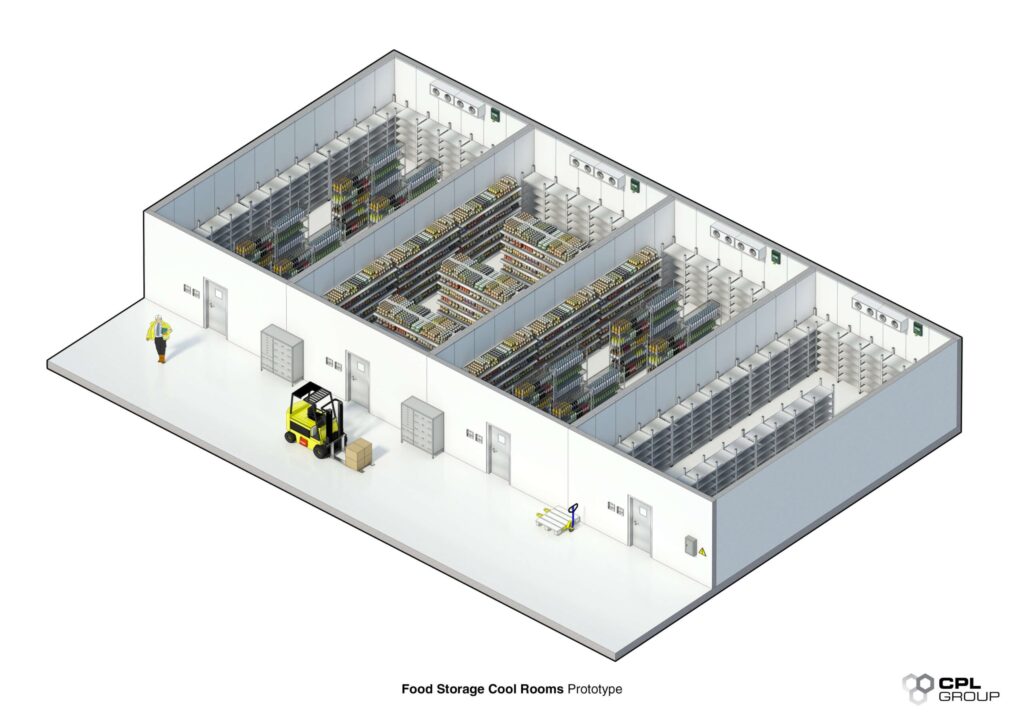
The production reality is that many facilities run multiple product lines in close proximity: a bakery with nut-containing and nut-free lines on adjacent tables; a dairy plant packing lactose-free and standard products from shared processing zones; a seafood facility processing shrimp and fish in the same area with sequential cleaning.
Under FSMA’s Preventive Controls for Human Food rule (21 CFR Part 117), food facilities must have a food safety plan that identifies hazards — including allergen cross-contact — and assigns preventive controls. In Canada, the Safe Food for Canadians Regulations (SFCR) contain equivalent requirements. Both regimes treat physical separation as the highest-value preventive control for allergen cross-contact because it is verifiable, documentable, and does not rely on human procedure.
What FSMA / SFCR requires in 2026
There has been a consistent shift in auditor expectations across the 2024–2026 period. The key requirements CPL Group’s customers are being assessed against include:
- Physical separation of high-care and high-risk zones from standard production — a physical boundary, not just a floor marking, that prevents air, aerosol, and foot-traffic cross-contamination.
- Dedicated entry and exit points for high-care zones, with clothing change and hand hygiene facilities located at the transition point.
- Washdown-compliant barrier materials that can withstand daily hot water, chemical, and pressure cleaning without harbouring bacteria in seams or degraded surfaces.
- Allergen bay or zone separation for facilities running concurrent allergen-containing and allergen-free production lines.
- Documented, inspectable physical controls that can be evidenced in the audit trail.
FDA inspectors and BRCGS auditors active in US and Canadian facilities are consistently citing inadequate physical allergen separation as a finding. Physical barriers — food-grade walls, allergen bay enclosures, and washdown-compliant curtain systems — provide the documented preventive control that inspection reports require.
The four barrier types deployed in F&B cross-contamination control
Food Grade Walls and Rooms
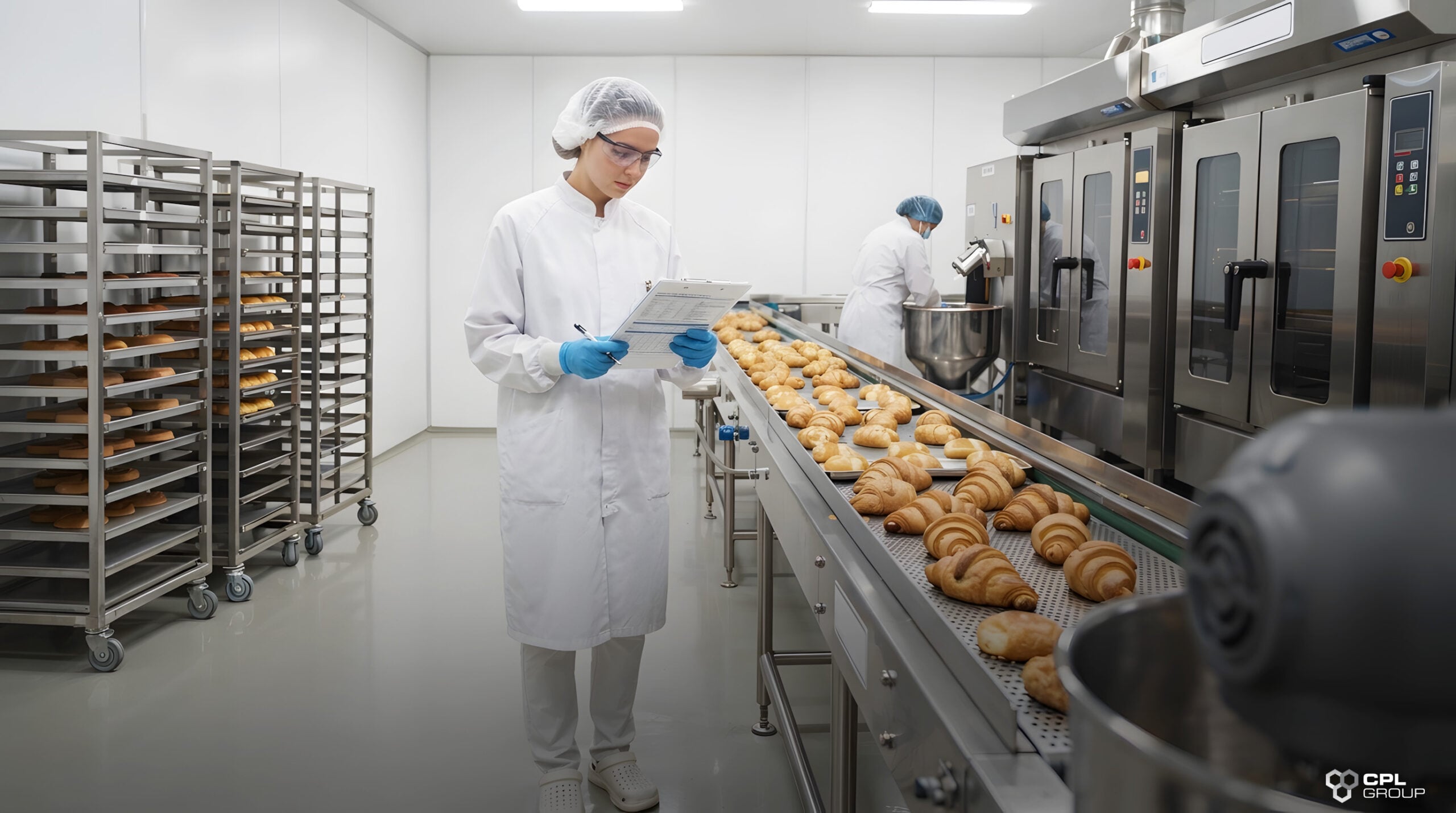
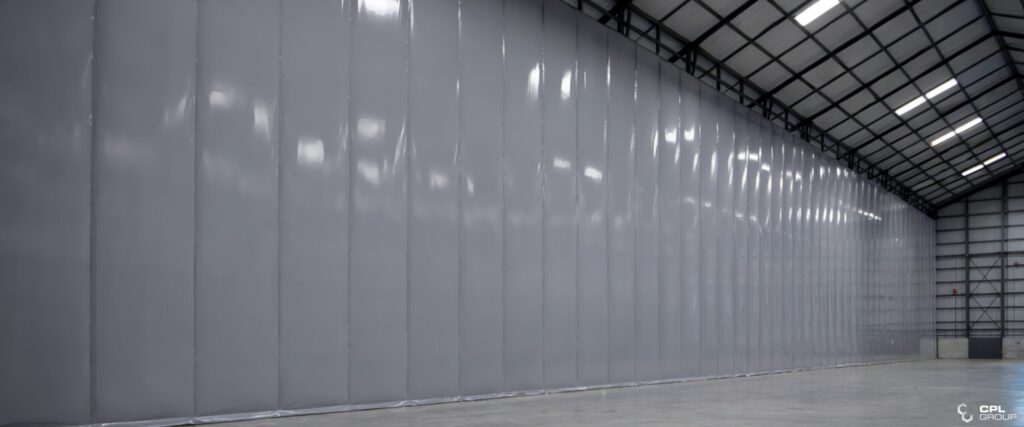
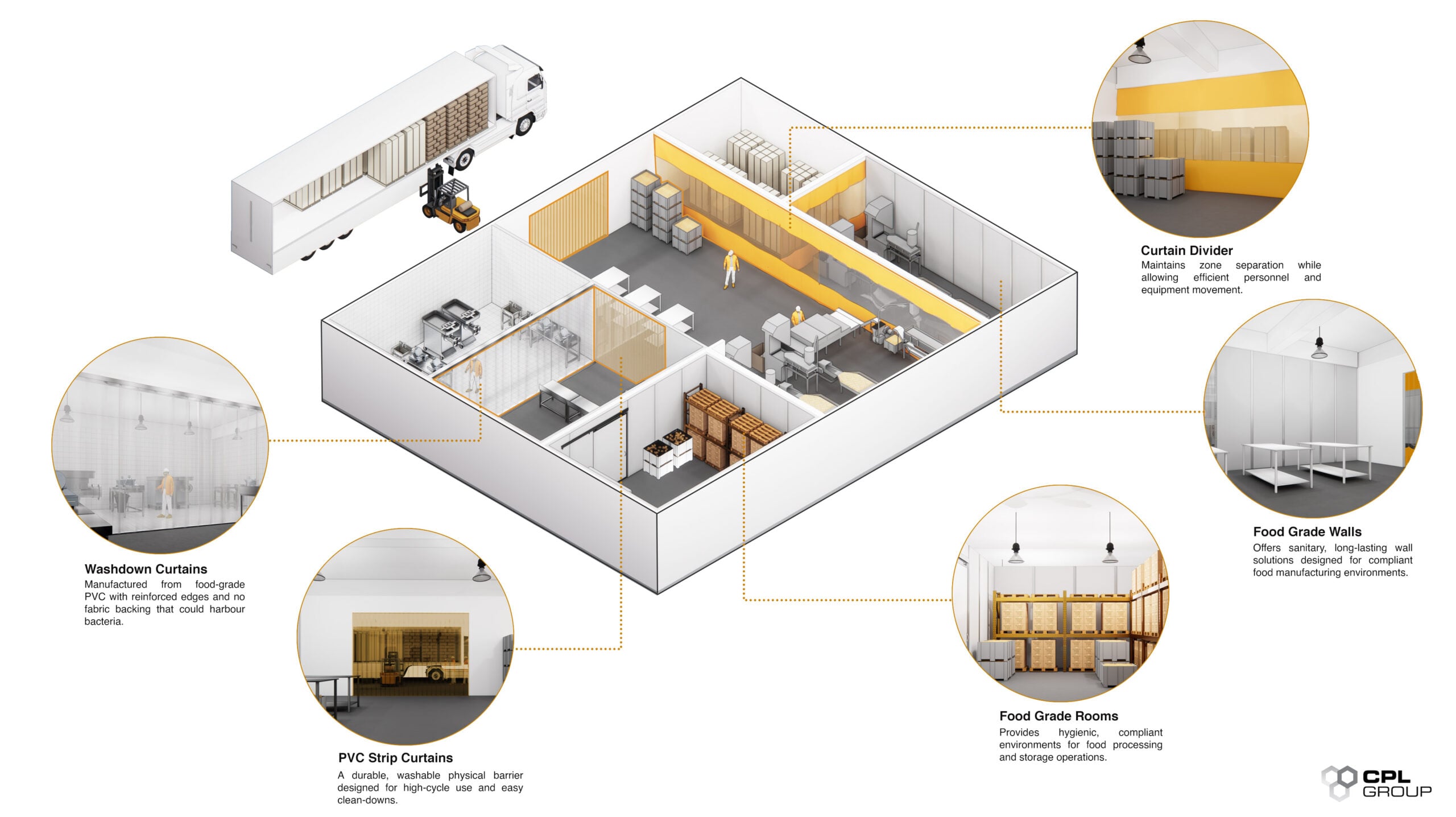
Permanent or semi-permanent hygienic wall systems built from food-grade PVC panels that are impervious, crevice-free, and resistant to the chemical cleaning agents used in food production environments. Used to physically separate high-care zones, allergen bays, and RTE areas from raw production. CPL’s Food Grade Wall systems are configured to site-specific dimensions with no exposed fixings or harborage points.
Washdown Curtains
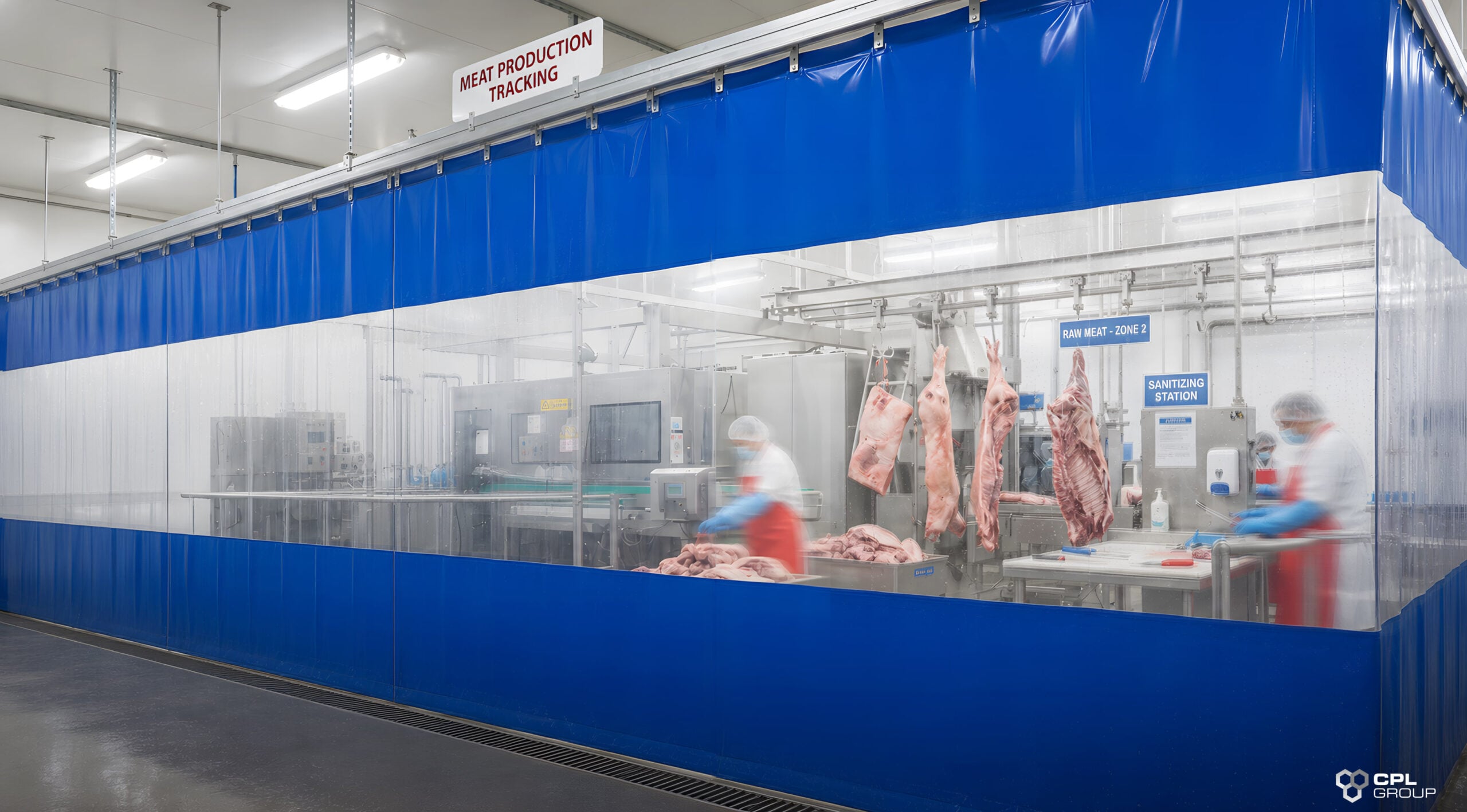
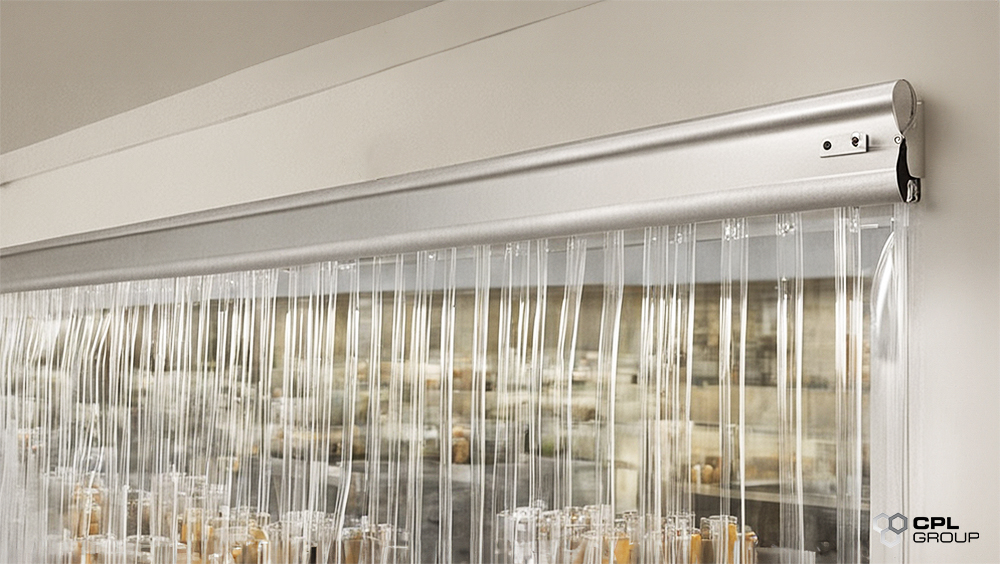
Heavy-duty PVC curtain systems designed to withstand daily washdown cycles including hot water, steam, and food-grade chemical cleaning agents. Deployed at doorways, loading bay entries, and transition points between production zones where a rigid wall is impractical. CPL’s Washdown Curtains are manufactured from food-grade PVC with reinforced edges and no fabric backing that could harbour bacteria.
PVC Strip Curtains and Flexi Doors
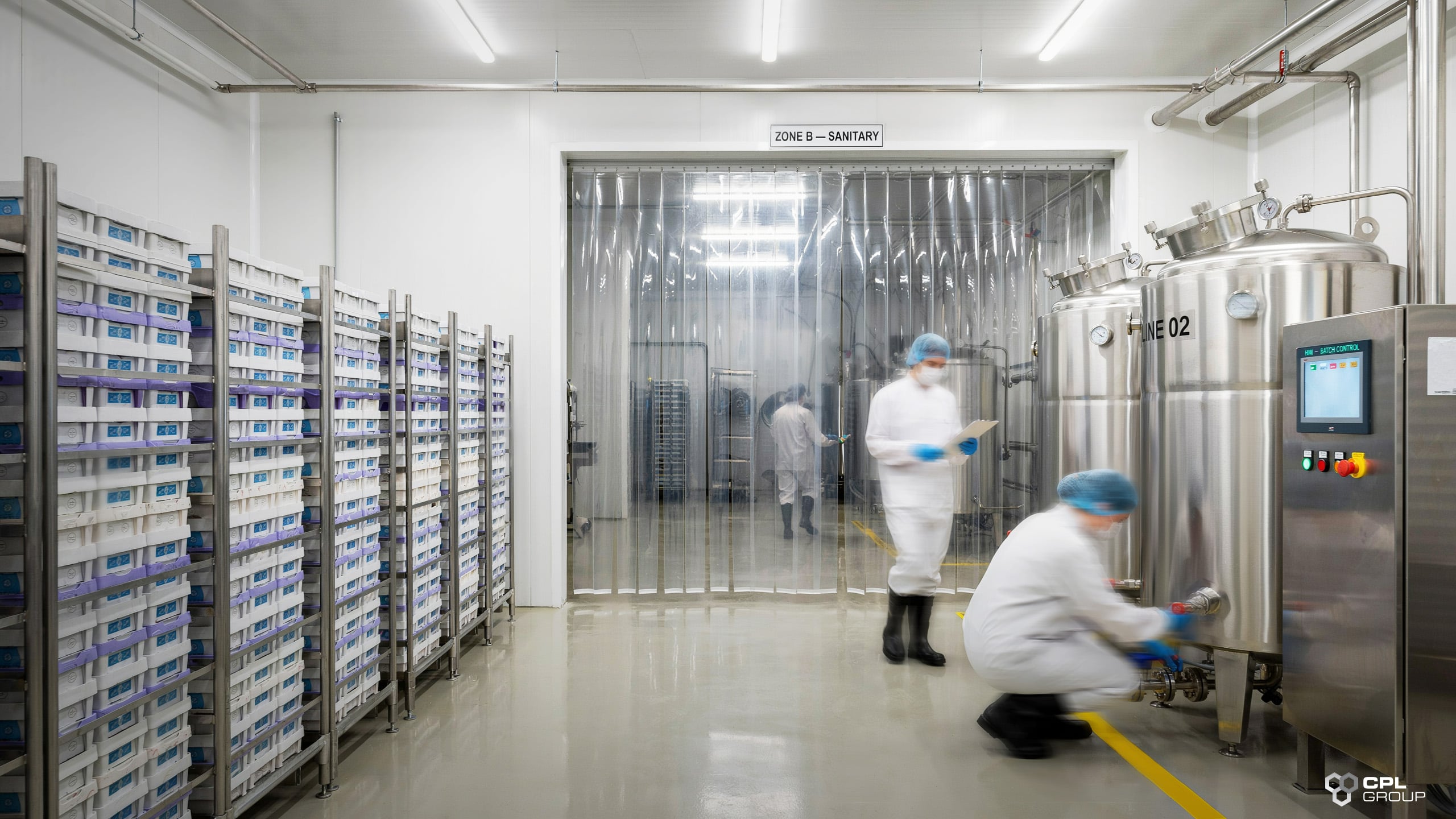
High-traffic transition points between cold rooms and production floors, between allergen and non-allergen zones, require a barrier that allows frequent personnel and equipment movement without compromising separation. CPL’s food-grade PVC strip curtains and flexi doors provide a physical separation layer that withstands high-cycle use without degradation and can be washed in place during facility clean-downs.
Allergen Bay Enclosures
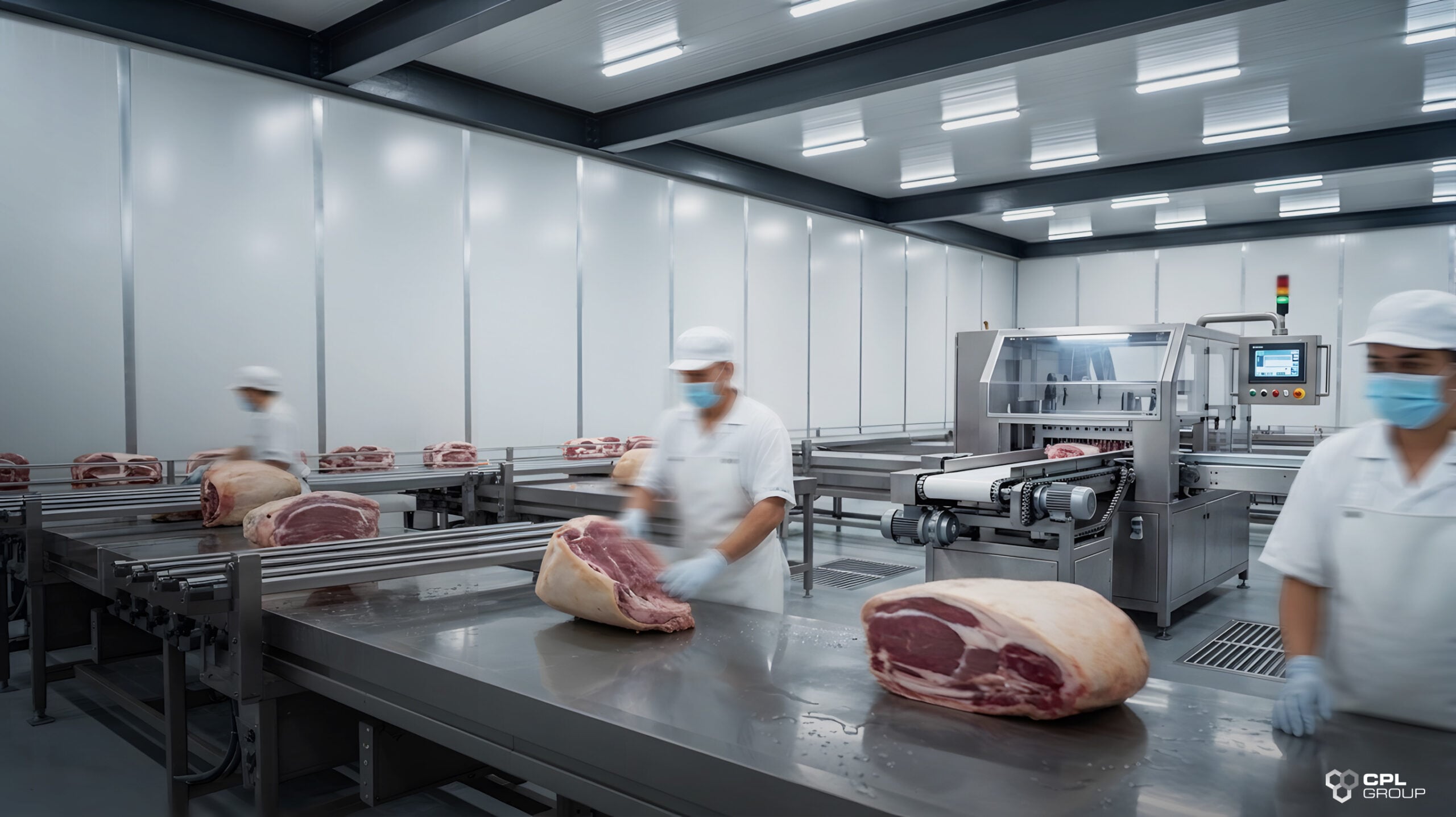
For facilities running concurrent allergen-containing and allergen-free production, dedicated allergen bays with their own air handling, dedicated equipment sets, and controlled entry/exit provide the engineered separation that FSMA / SFCR audits require. CPL designs and supplies the full enclosure system including walls, curtain doors, and transition zones.
Hygienic design: what food-grade actually means
The term “food-grade” is used loosely in the market. For barrier and partition systems in food production environments, it should mean: materials that are impervious to moisture, free of crevices and harborage points, chemically resistant to cleaning and sanitising agents used on-site, and capable of withstanding the temperatures involved in hot water or steam cleaning. CPL Group’s food-grade PVC systems meet these requirements with food-contact certified PVC, sealed panel joins, and mounting systems that avoid exposed fixings.
Installation on live production sites
One of the practical barriers to specifying physical separation systems is the concern about installation disruption. CPL Group’s modular PVC systems are designed for installation on live production sites during scheduled maintenance windows or outside production hours. The modular design means individual panels can be replaced or reconfigured without dismantling the entire system — important in facilities where production layouts change seasonally.
CPL Group supplies and installs across the US and Canada. Contact our North America team for site-specific consultation and lead times.
For facilities working to an upcoming audit with a tight timeline, CPL Group has completed full allergen bay installations within four to six weeks from initial site survey to handover. Early engagement is strongly recommended.
Key takeaways
- Allergen cross-contamination controls are shifting from procedural to engineered requirements under FDA Food Safety Modernization Act (FSMA) Preventive Controls for Human Food rule and CFIA Safe Food for Canadians Regulations (SFCR).
- Physical separation — food-grade walls, washdown curtains, strip curtains, and allergen bay enclosures — is the documented, verifiable control auditors increasingly require.
- Food-grade barrier systems must meet hygienic design standards: impervious, crevice-free, chemically resistant, and washdown-compliant.
- CPL Group’s modular systems can be installed on live sites with minimal disruption and configured to site-specific requirements.
- If you have an upcoming audit or are redesigning a production zone, contact CPL Group for a site consultation and no-obligation quote.
Frequently Asked Questions
What physical controls does FSMA / SFCR require for allergen separation?
FSMA / SFCR requires that allergen cross-contamination risk be managed through physical separation where scheduling and cleaning alone are insufficient. FDA inspectors and BRCGS auditors active in US and Canadian facilities are consistently citing inadequate physical allergen separation as a finding. Physical barriers — food-grade walls, allergen bay enclosures, and washdown-compliant curtain systems — provide the documented preventive control that inspection reports require.
What does food-grade mean for a PVC barrier system?
A food-grade barrier must be impervious to moisture, free of crevices or harborage points, chemically resistant to cleaning and sanitising agents, and capable of withstanding hot water or steam cleaning temperatures. CPL Group’s systems use food-contact certified PVC with sealed joins and no exposed fixings.
Can CPL Group systems be installed on live production sites?
Yes. CPL Group’s modular PVC systems are designed for installation during scheduled maintenance windows or outside production hours without facility shutdown. Most allergen bay installations are completed within four to six weeks from site survey to handover.
How does physical separation differ from cleaning as an allergen control?
Scheduled cleaning is a procedural control that depends on human compliance. Physical separation is an engineered control that prevents cross-contamination regardless of procedure adherence, can be inspected in an audit trail, and satisfies the preventive control requirements of FSMA / SFCR without relying on scheduling alone.
Which CPL Group products are used for allergen separation?
Food Grade Walls (permanent allergen bay and high-care zone separation), Food Grade Rooms (full enclosed environments), Washdown Curtains (transition points requiring daily chemical cleaning), PVC Strip Curtains (high-traffic zone transitions), and Flexi Doors (frequent-access production entries). CPL Group designs systems combining these products for site-specific requirements.