
The Shift Toward Modular Industrial Facilities
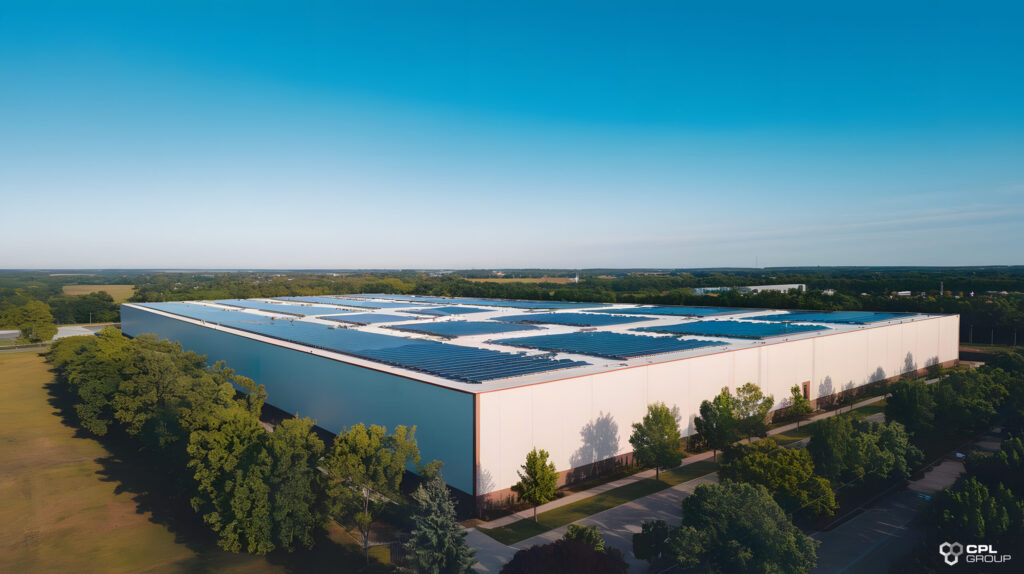
Factories and warehouses are undergoing a major transformation. Modular factory partitions allow facilities to transform layouts without costly reconstruction or downtime.
Modern facilities are no longer static environments built for a single workflow. Instead, they are becoming flexible, modular, and automation-ready, allowing businesses to adapt quickly to changing production demands.
Rather than investing in permanent structural changes, many organizations are choosing modular partition systems to reshape their operational spaces without downtime.
This shift is particularly important for industries such as:
- Warehousing
- Food processing
- Manufacturing
- Distribution
These sectors require environments that can evolve as production needs change.
Why Traditional Construction No Longer Meets Operational Demands
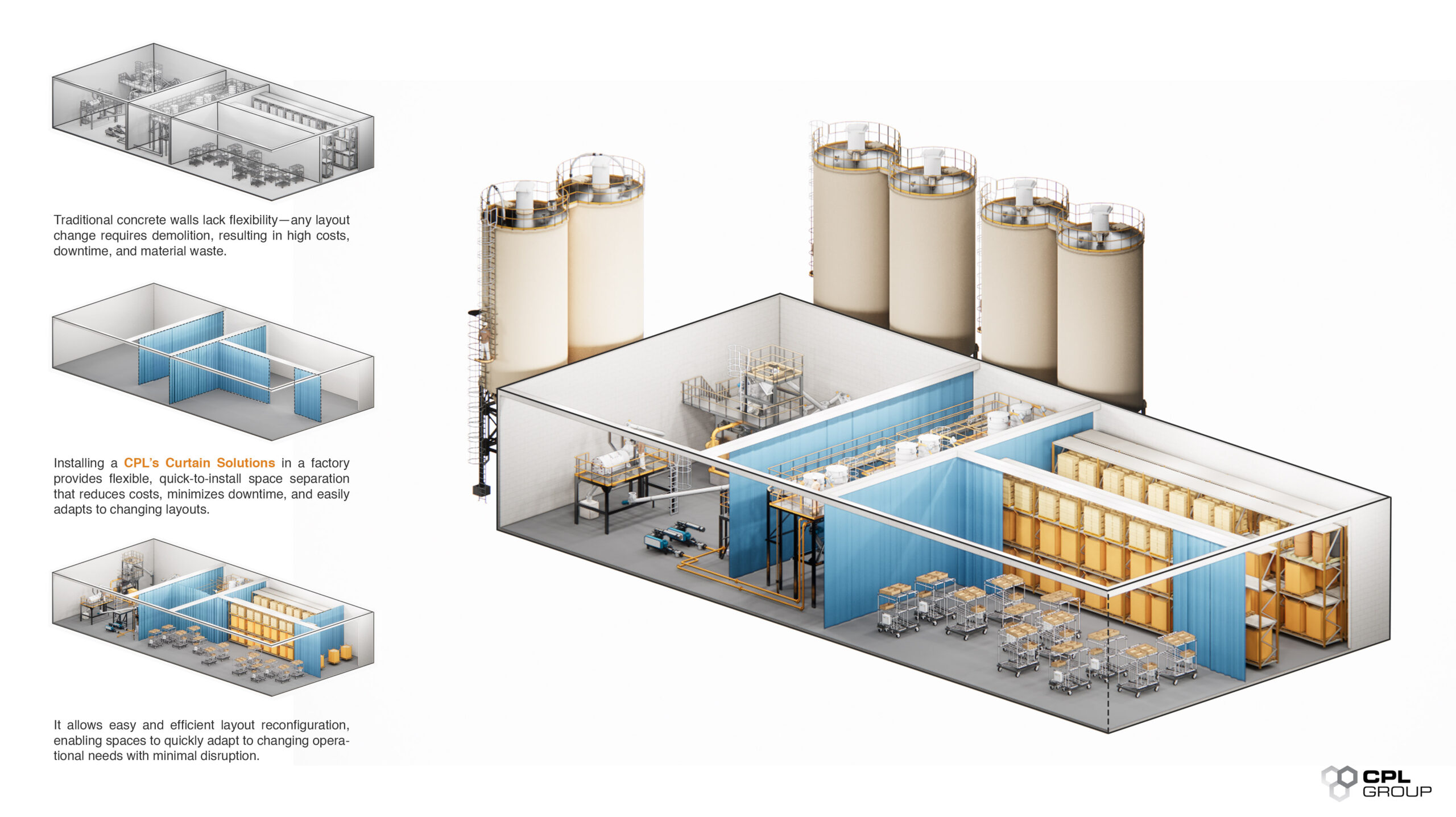
Conventional construction methods create fixed spaces that are difficult and expensive to modify.
Typical challenges include:
- Limited adaptability
- Extended downtime during renovation
- High structural costs
- Disruption to ongoing operations
As production volumes increase and workflows change, rigid layouts become operational bottlenecks.
Modular factory partitions and warehouse partitions provide a smarter alternative by enabling rapid reconfiguration without structural rebuilds.
Create New Production Zones in Days — Not Months
One of the biggest advantages of modular systems is speed.
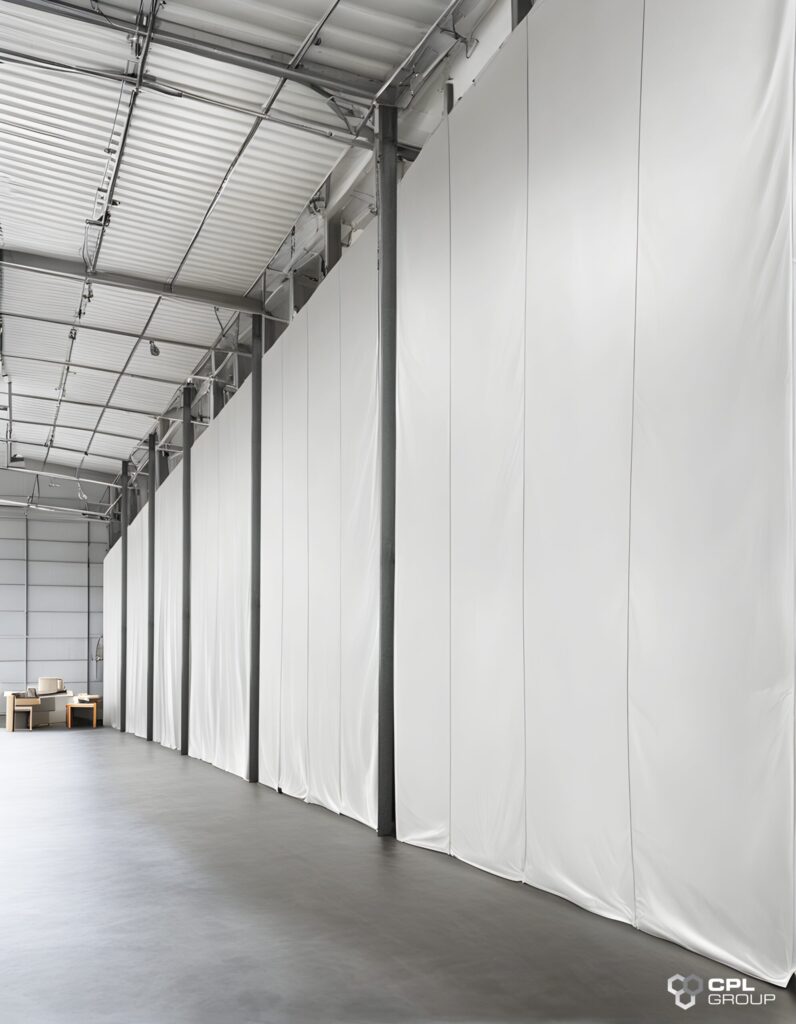
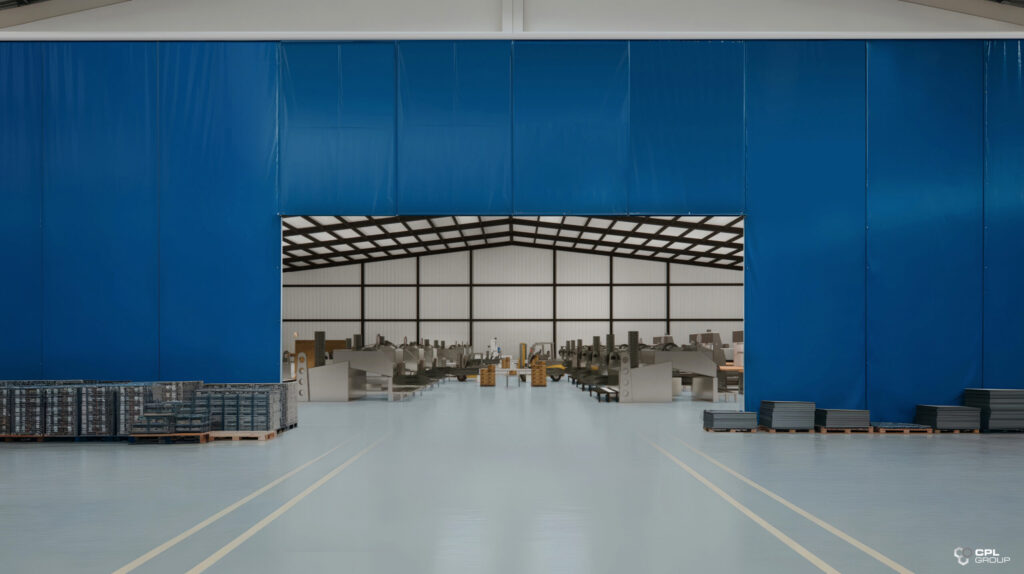
Using factory divider curtains and warehouse partition systems, facilities can create:
- Production zones
- Storage areas
- Packing stations
- Isolation zones
- Workflow separation areas
These systems can be installed quickly and modified as operations evolve.
Relevant CPL Solutions:
- Factory Divider Systems — Create separated production zones
- Warehouse Divider Curtains — Segment storage and dispatch areas
- Retractable Curtains — Enable flexible access and movement
- Flexible Industrial Doors (Flexi Doors) — Maintain accessibility while controlling flow
This modular approach reduces downtime and improves operational continuity.
Expand Without Expanding Your Building
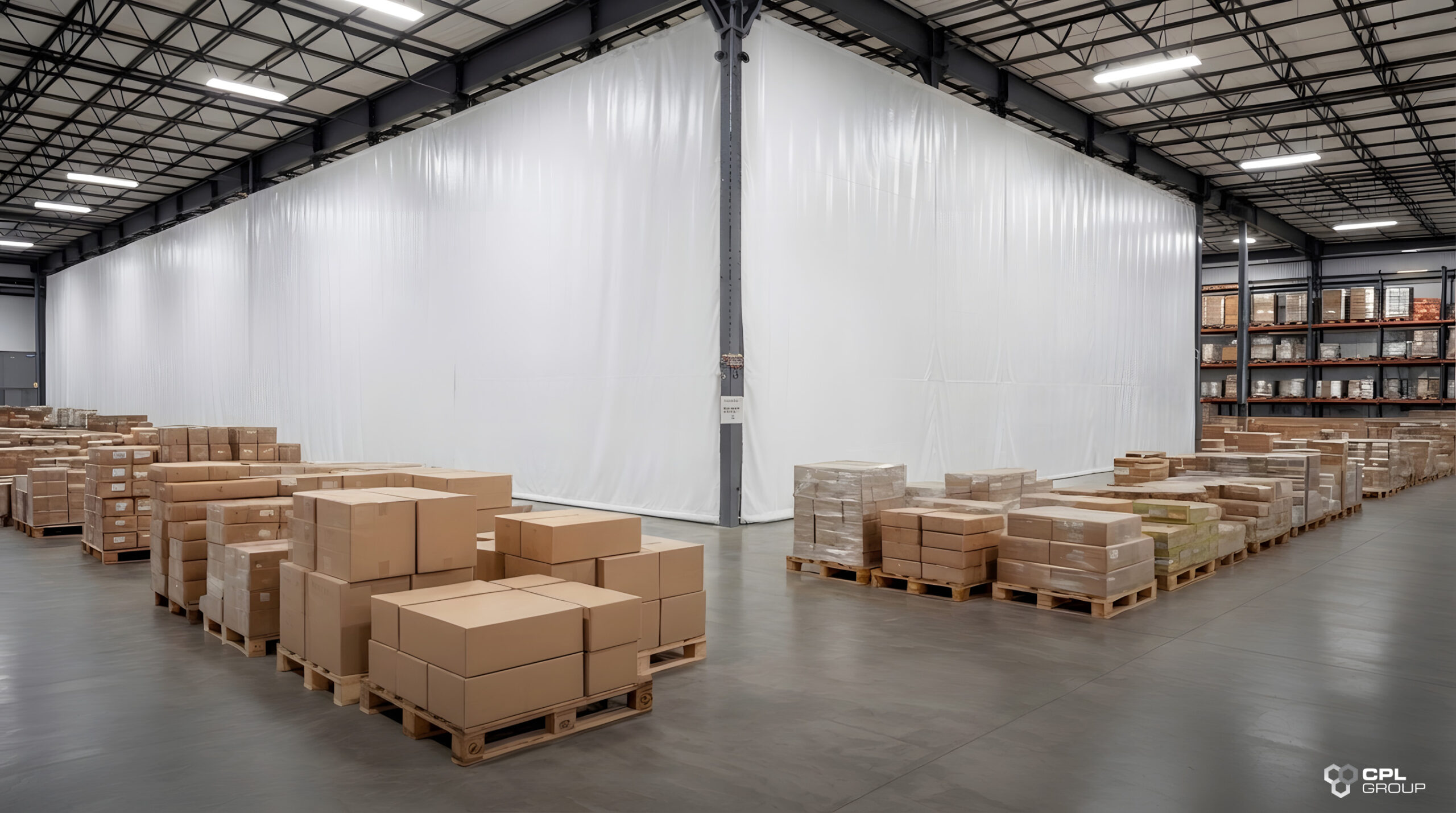
Facility expansion does not always require new buildings.
Many warehouses operate with underutilized vertical or sectional space that can be optimized using modular partition systems.
By installing internal dividers, facilities can:
- Increase storage density
- Separate workflows
- Improve operational efficiency
- Reduce cross-traffic disruptions
This allows businesses to maximize existing infrastructure before committing to costly structural expansions.
Flexible Layouts Support Automation & Workflow Optimization
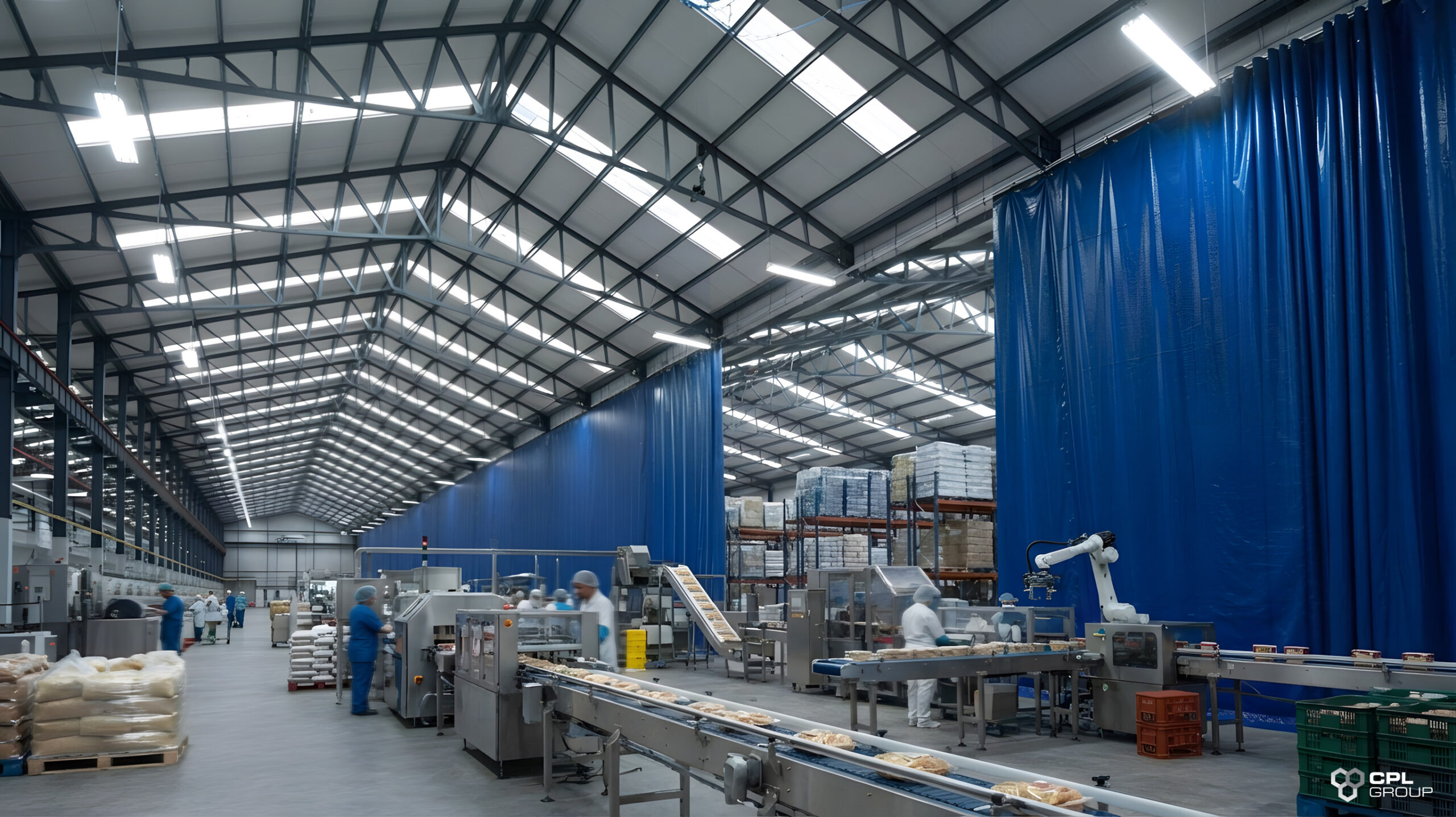
Automation is rapidly changing industrial operations.
Robotics, conveyor systems, and automated picking processes require environments that can adapt quickly.
Modular layouts support automation by:
- Creating dedicated robotic zones
- Isolating machinery
- Protecting sensitive operations
- Maintaining efficient material flow
Flexible partition systems allow layouts to evolve alongside automation technologies.
This capability is critical in modern distribution and manufacturing environments.
Improve Workflow Efficiency & Safety
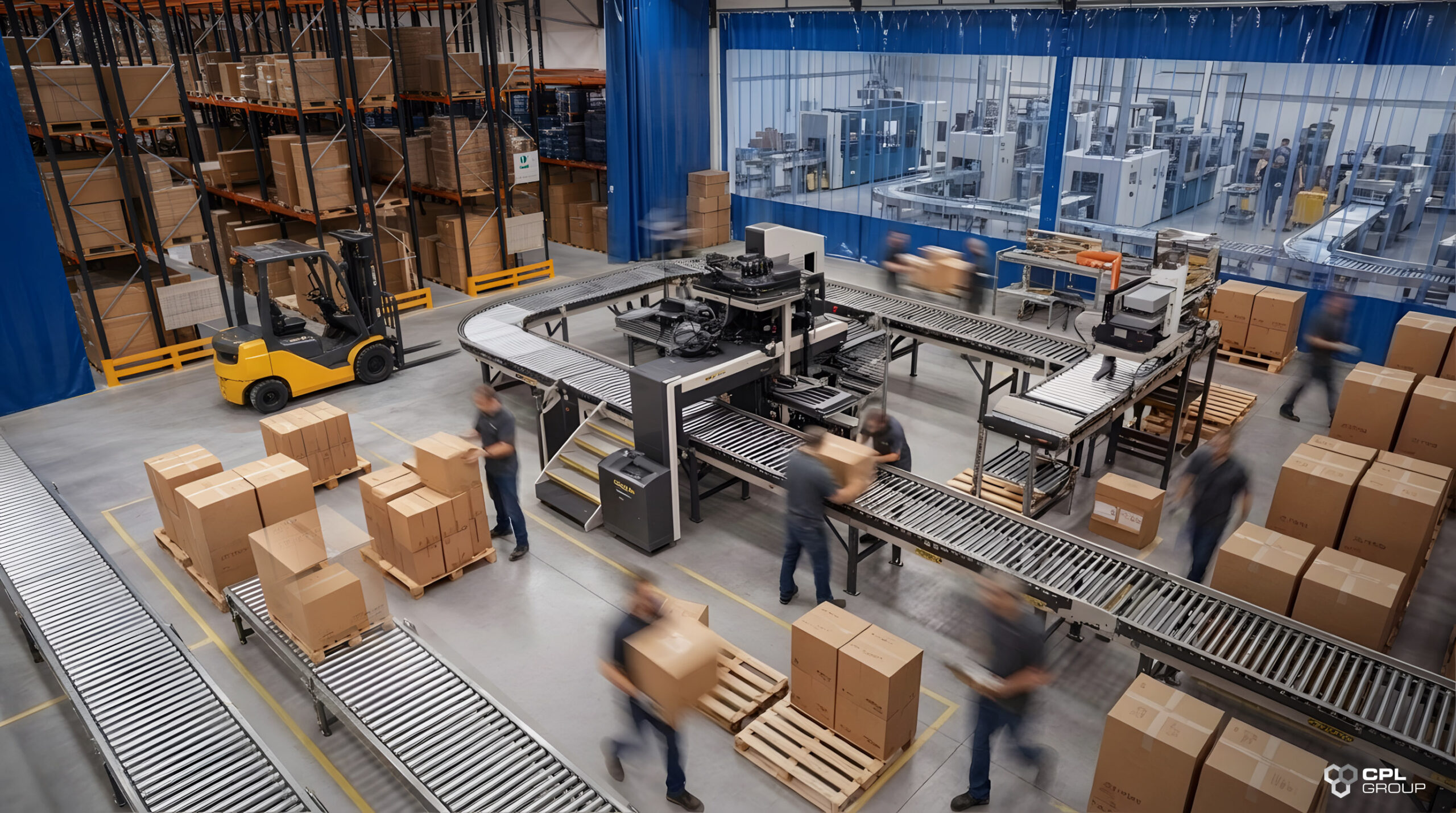
Partition systems are not only about space—they also improve operational control.
Proper zoning reduces:
- Workflow congestion
- Cross-contamination risks
- Equipment interference
- Personnel safety risks
Modular dividers also help create:
- Controlled work zones
- Dedicated process areas
- Safe movement corridors
This structured layout supports both efficiency and safety compliance.
Applications Across Key Industries
Modular factory and warehouse transformation supports multiple industries through modular factory partitions.
Warehousing & Distribution
Used to:
- Segment inventory areas
- Create dispatch zones
- Separate logistics operations using modular factory partitions
Manufacturing
Used to:
- Create dedicated production lines
- Isolate specialized machinery
- Improve workflow efficiency
Food Processing
Used to:
- Separate hygienic zones
- Control contamination risk
- Maintain operational cleanliness
Industrial Operations
Used to:
- Control dust and debris
- Isolate hazardous processes
- Improve site organization
The Strategic Advantage of Modular Facility Design
Businesses that adopt modular layouts gain long-term flexibility through modular factory partitions.
Key benefits include:
- Faster operational adaptation
- Reduced capital expenditure
- Minimal disruption during changes
- Scalable facility growth
- Improved space utilization
Rather than rebuilding facilities, organizations can evolve them with modular factory partitions.
This approach supports growth without the delays associated with traditional construction.