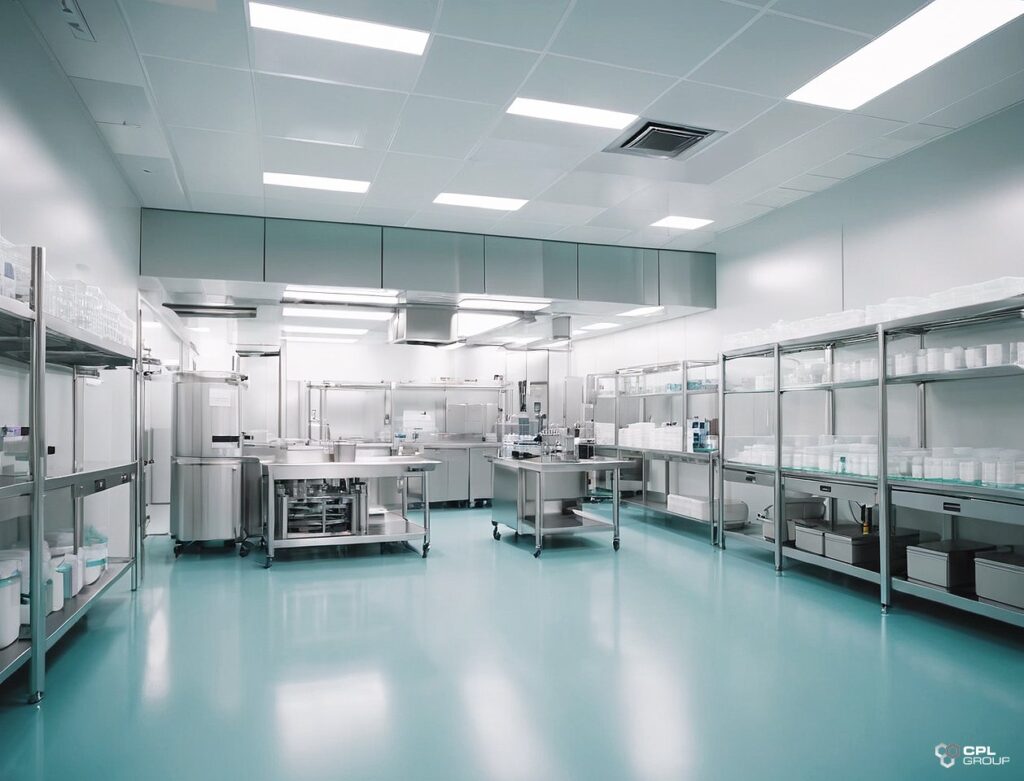
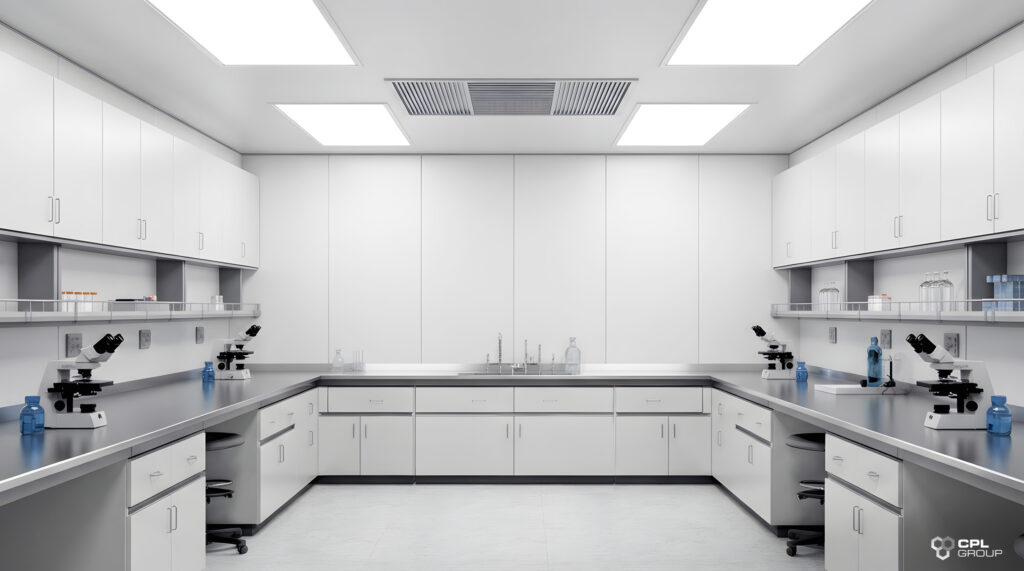
UK pharmaceutical manufacturing operates under one of the most established GMP regulatory frameworks in the world. The Medicines and Healthcare products Regulatory Agency (MHRA) enforces GMP standards aligned with the EU guidelines on GMP (EudraLex Volume 4) and the PIC/S Guide PE 009, with manufacturing site inspections that assess facility design, environmental controls, and contamination management as primary compliance criteria.
Post-Brexit, the MHRA operates as an independent regulatory authority with its own inspection programme and recognition arrangements with international partners including the FDA, EMA, and TGA. For UK pharmaceutical manufacturers, MHRA GMP compliance remains the central licence condition — and facility environment is assessed as directly as it ever was.
This article covers the compliance landscape facing UK pharmaceutical and laboratory facilities, the environmental control gaps most commonly identified in MHRA inspection findings, and how CPL Group’s engineered solutions are deployed to support MHRA audit readiness.
The UK regulatory landscape for pharmaceutical and laboratory facilities
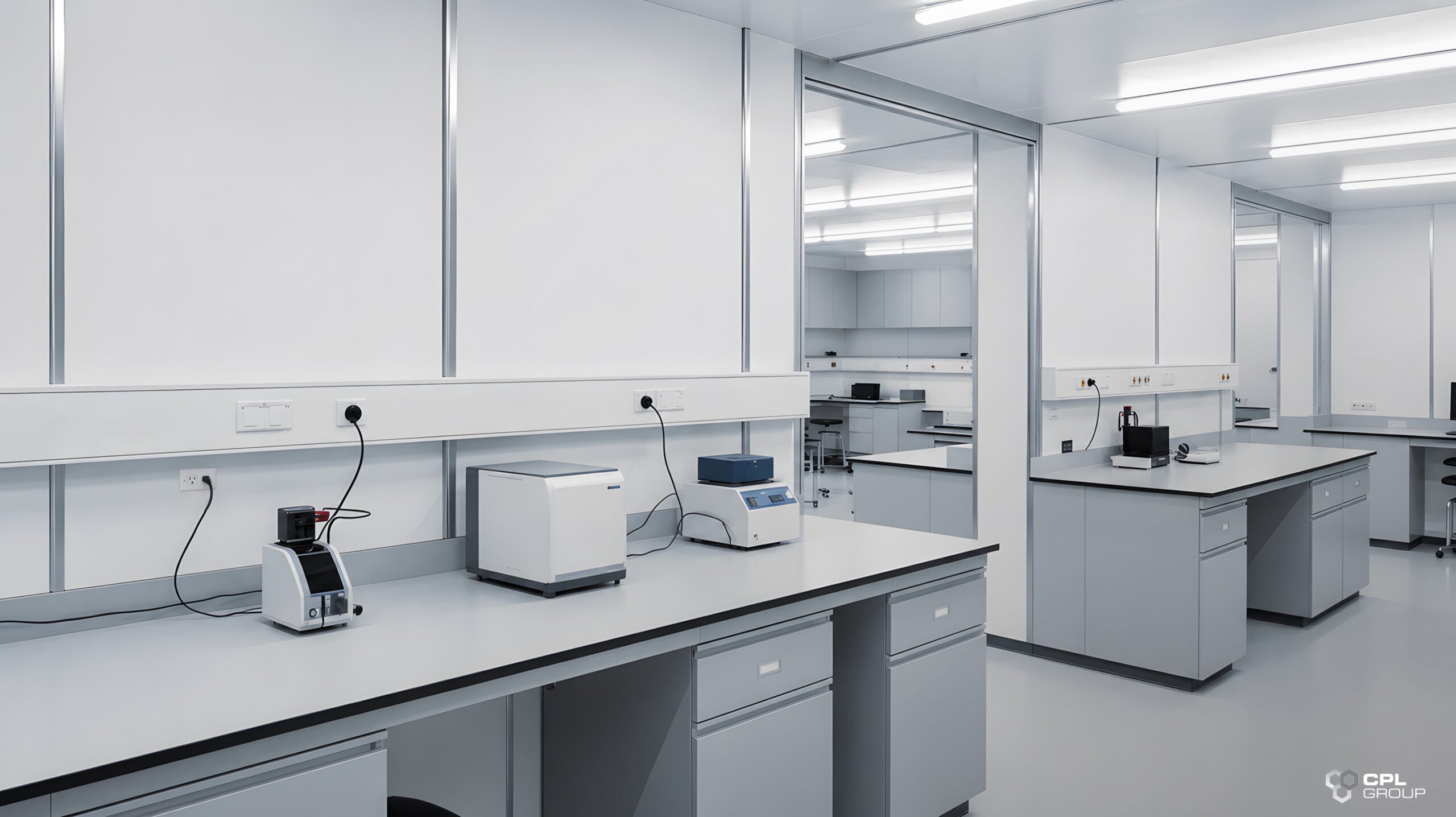
UK pharmaceutical manufacturers must hold a Manufacturer’s Licence (MIA) issued by the MHRA and comply with the UK GMP guidelines — currently the UK version of EudraLex Volume 4, maintained by the MHRA post-Brexit. Facility design requirements are detailed in UK GMP Annex 1 (sterile products), Annex 2 (biologics), and the main guide chapters covering premises and equipment, contamination control, and environmental monitoring.
For UK laboratories — including QC labs, stability testing facilities, hospital pharmacy units, and academic research facilities — ISO 14644 clean room classification and UKAS accreditation requirements set the relevant environmental performance standards. UK Biobank, UKHSA-designated facilities, and NHS pharmaceutical manufacturing units operate under additional sector-specific frameworks.
Three compliance dimensions most commonly drive facility investment in UK pharma and lab:
- Contamination control strategy — MHRA GMP Annex 1 (2022 revision) significantly expanded the contamination control strategy (CCS) requirements, creating demand for upgraded physical contamination barriers across sterile and non-sterile manufacturing alike.
- Environmental monitoring and zone integrity — demonstrating continuous compliance between inspections, not just during pre-inspection facility upgrades.
- Cold chain compliance — maintaining validated storage conditions for biologics, ATMPs, temperature-sensitive APIs, and clinical trial materials under MHRA storage guidelines and ICH Q1A requirements.
CPL Group pharmaceutical and laboratory solutions — the full range
Clean Room Solutions
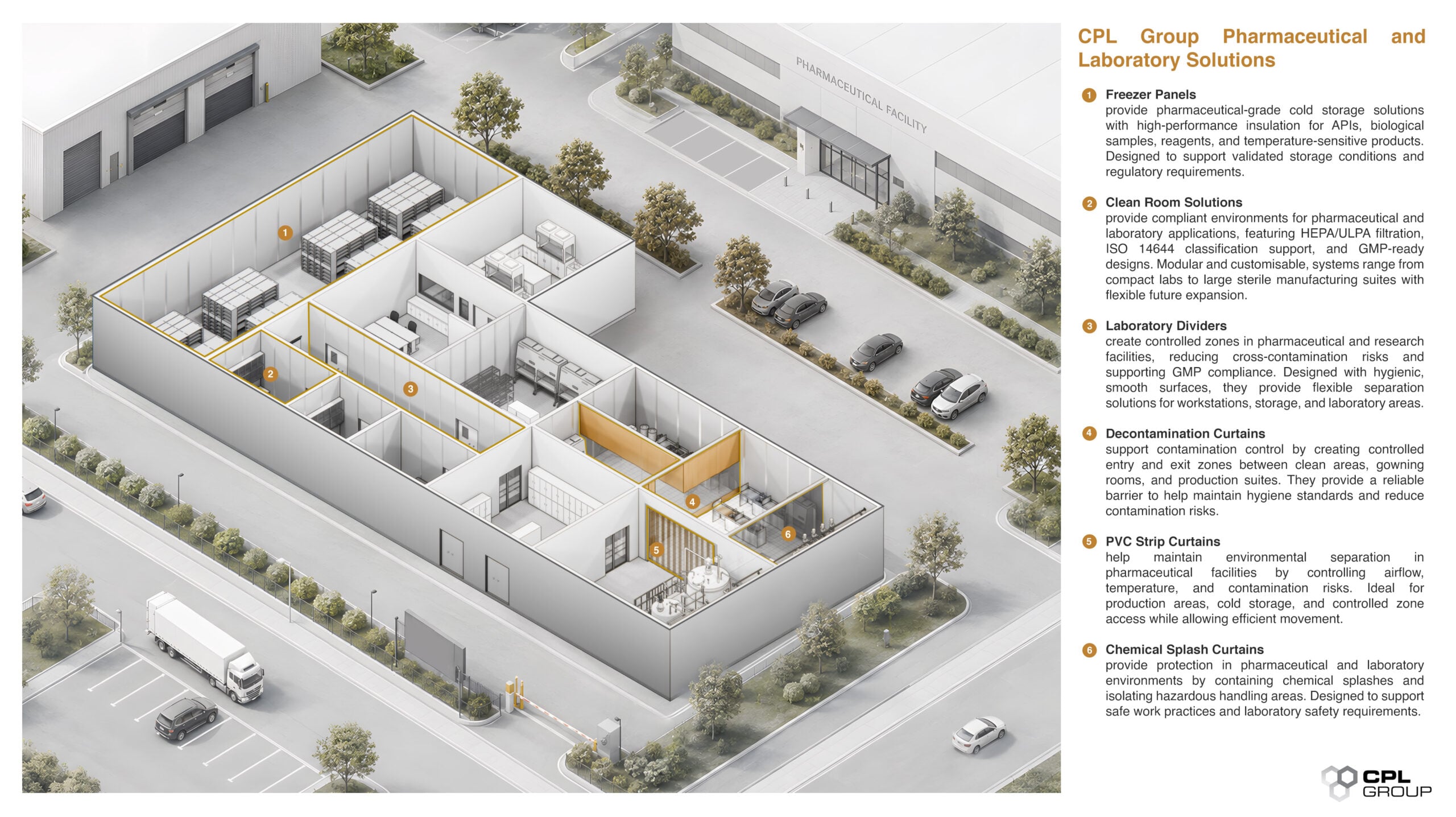
CPL Group’s Clean Room Solutions are purpose-built for pharmaceutical manufacturing and laboratory environments where contamination control is a regulatory requirement, not a preference. Systems incorporate HEPA and ULPA filtration to remove 99.99% of airborne particles, with design options that support ISO 14644 clean room classification and GMP compliance. Fully customisable in size and configuration — from compact QC lab clean rooms to large-scale sterile manufacturing suites — with modular construction that allows future reconfiguration as production requirements evolve.
Laboratory Dividers
CPL Group’s Laboratory Dividers are engineered to create defined, controlled zones within pharmaceutical and research laboratory environments. By establishing clear physical separation between workstations, sampling areas, and reagent storage, Laboratory Dividers reduce cross-contamination risk, support personnel traffic management, and contribute to GMP compliance by maintaining zone integrity during inspections. Available in a range of sizes and configurations to suit diverse laboratory floor plans, with clean, smooth surfaces that meet pharmaceutical hygiene standards.
Freezer Panels
For pharmaceutical facilities requiring reliable cold storage — whether for temperature-sensitive APIs, biological samples, reagents, or finished product — CPL Group’s Freezer Panels provide the insulated enclosure performance needed to maintain precise temperature control. Panels are engineered for pharmaceutical-grade cold store applications, supporting validated storage conditions for Schedule 4 and Schedule 8 products, biologic compounds, and clinical trial materials.
Cross Contamination Solutions
Pharmaceutical facilities running multiple product lines, handling potent compounds, or operating under changeover protocols face a heightened cross-contamination risk that layout alone cannot resolve. CPL Group’s Cross Contamination Solutions provide engineered physical barriers that prevent airborne particulate, chemical vapour, and personnel-borne contamination from crossing between zones — supporting GMP requirements for dedicated processing areas and audit-ready contamination control documentation.
Decontamination Curtains
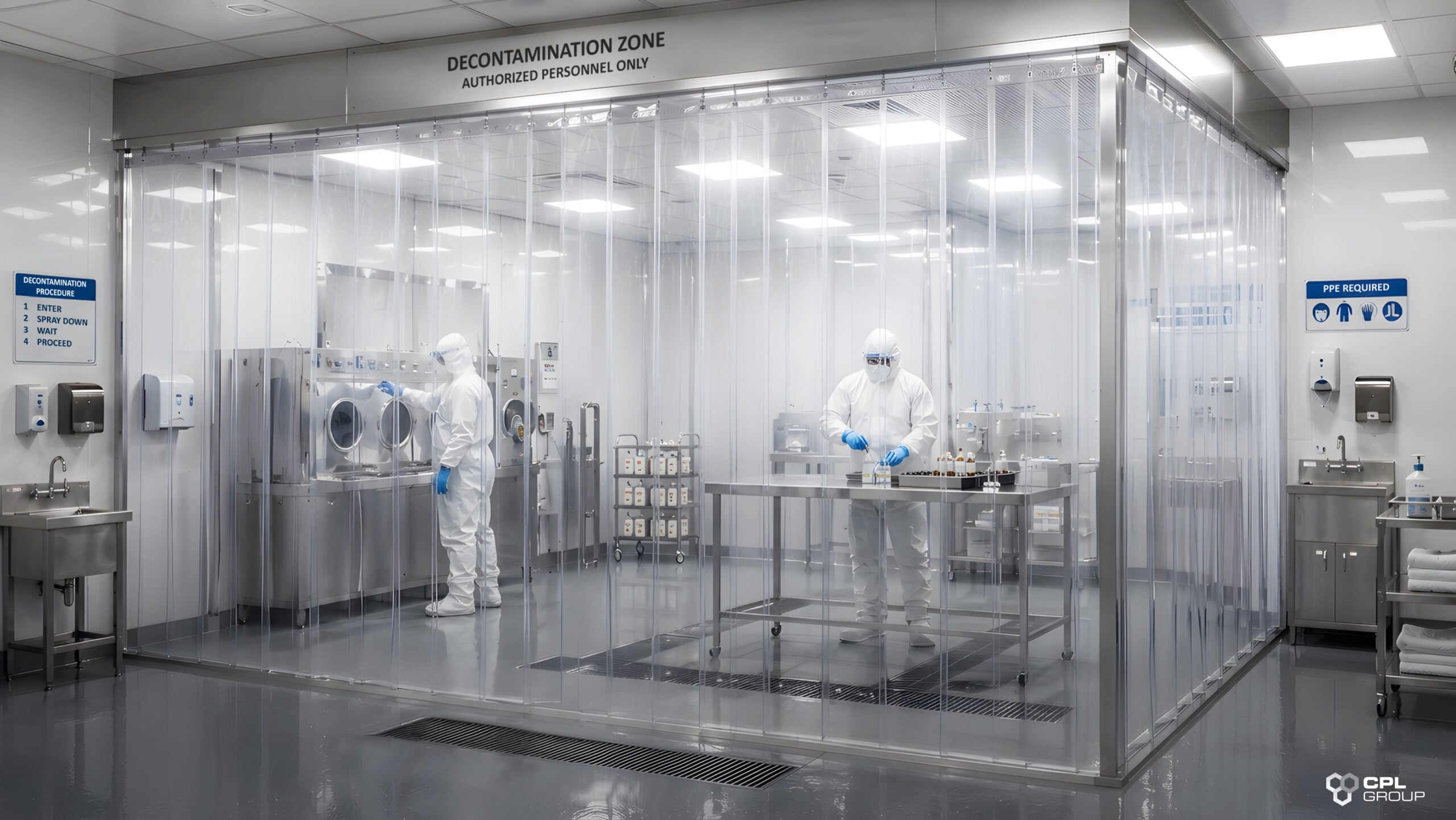
CPL Group’s Decontamination Curtains create defined entry and egress zones that support contamination control protocols in pharmaceutical manufacturing and laboratory settings. Used at the interface between clean and controlled zones, gowning areas, and production suites, Decontamination Curtains provide a physical, auditable barrier that reinforces personnel flow protocols and reduces the risk of particulate or microbial ingress.
Chemical Splash Curtains
In pharmaceutical and laboratory environments handling solvents, reagents, and hazardous chemical inputs, Chemical Splash Curtains provide a critical layer of personnel and equipment protection. CPL Group’s chemical-resistant curtain systems are designed to contain splash events, isolate chemical handling areas, and support safe working procedures in line with WHS and laboratory safety regulations.
PVC Strip Curtains
CPL Group’s PVC Strip Curtains are deployed in pharmaceutical facilities to manage personnel and material flow between zones while maintaining environmental separation. Suitable for doorways between controlled and non-controlled areas, production entry points, and cold store access, PVC Strip Curtains reduce air exchange between zones — supporting temperature control, contamination management, and energy efficiency without impeding operational throughput.
The MHRA Annex 1 revision and its implications for UK facility design
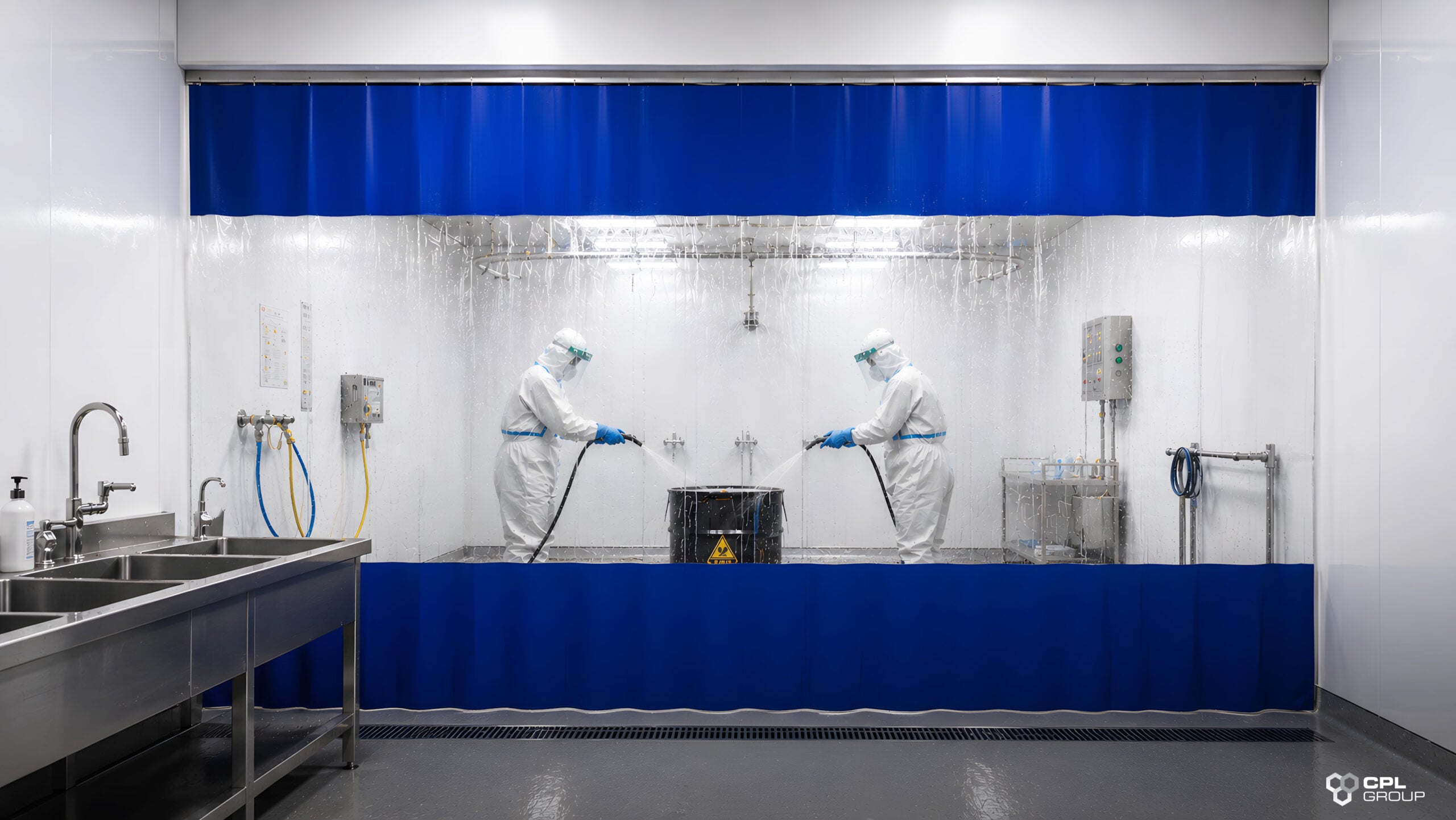
The 2022 revision of EU GMP Annex 1 — adopted by the MHRA for UK application — introduced the formal requirement for a documented Contamination Control Strategy (CCS) as a central facility compliance document. The CCS must address facility design, equipment layout, personnel and material flow, environmental monitoring, and cleaning and sanitisation — and the physical environment must demonstrably support the claims made in the CCS.
This has elevated the importance of engineered physical contamination barriers in UK pharmaceutical facilities. Laboratory Dividers, Cross Contamination Solutions, Decontamination Curtains, and Clean Room Systems are now elements of a compliance document, not just operational conveniences. CPL Group’s product range provides the documented, certifiable facility hardware that a compliant CCS requires.
Key takeaways
- MHRA GMP — including the 2022 Annex 1 revision — requires a documented Contamination Control Strategy supported by engineered physical barriers, not procedural controls alone.
- CPL Group’s full pharmaceutical and laboratory range addresses the contamination control, zone separation, environmental monitoring support, and cold chain compliance requirements that MHRA inspectors assess.
- CPL Group supplies and installs across the UK. Contact the UK and European team on +44 777 111 5472.
Frequently Asked Questions
What regulatory standards apply to pharmaceutical facilities in the UK?
UK pharmaceutical manufacturers must comply with MHRA GMP requirements — the UK version of EudraLex Volume 4, aligned with PIC/S PE 009. Key annexes include Annex 1 (sterile products — 2022 revision), Annex 2 (biologics), and the main guide on premises, equipment, and contamination control. Clean room environments are assessed against ISO 14644. UKAS-accredited laboratories operate under ISO/IEC 17025.
How does the 2022 MHRA Annex 1 revision affect facility design requirements?
The 2022 Annex 1 revision introduced a formal requirement for a documented Contamination Control Strategy (CCS) covering facility design, equipment layout, personnel and material flow, environmental monitoring, cleaning, and sanitisation. The CCS requires that the physical facility demonstrably supports the contamination control claims — meaning engineered barriers, zone separation systems, and controlled entry/exit points must be in place, not just documented as procedural controls.
What ISO classifications do CPL Group’s Clean Room Solutions support?
CPL Group’s Clean Room Solutions are designed and built to support ISO 14644-1 classification requirements from ISO Class 5 through ISO Class 8, covering the full range of pharmaceutical manufacturing and laboratory environments from aseptic fill-finish to general QC laboratories. The specific filtration specification, air change rates, and pressure differential configuration are determined during the facility design phase based on the intended process classification.
How do CPL Group’s solutions support GMP compliance?
CPL Group’s pharmaceutical and laboratory systems are designed to support Good Manufacturing Practice (GMP) compliance across multiple dimensions: controlled airflow and pressure differentials through Clean Room Solutions, physical zone separation through Laboratory Dividers and Cross Contamination Solutions, personnel and material flow control through Decontamination Curtains and PVC Strip Curtains, and temperature-validated storage through Freezer Panels. The integrated suite allows facilities to address GMP requirements across facility layout, environmental control, and contamination management within a single supply relationship.
Can CPL Group solutions be configured for existing facilities?
Yes. CPL Group’s pharmaceutical and laboratory product range is modular and configurable for both new-build facilities and existing site retrofits. Laboratory Dividers, Cross Contamination Solutions, Decontamination Curtains, and PVC Strip Curtains can all be specified and installed within operational facilities with minimal disruption. Clean Room Solutions and Freezer Panels are designed to specification during a consultation and survey process. CPL Group provides no-obligation consultation to assess site requirements and develop a tailored solution.
How do I request a quote from CPL Group?
Contact CPL Group directly via the website or the regional office number for your country. CPL Group provides no-obligation quotes and free consultations. For pharmaceutical and laboratory projects, early engagement is recommended to allow adequate time for design consultation, site survey where required, and product specification ahead of facility commissioning or audit deadlines.
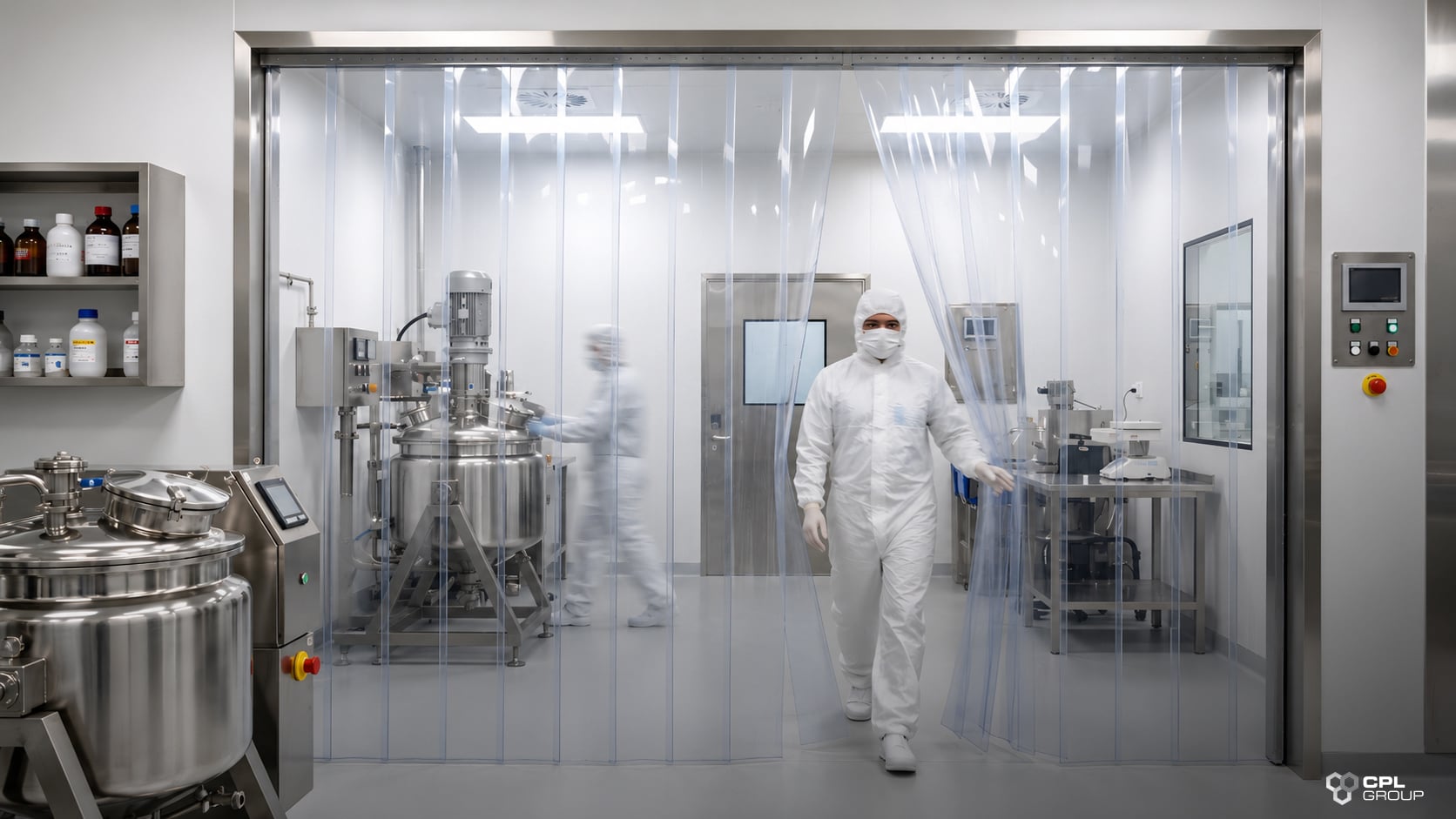
From clean rooms and laboratory dividers to contamination control systems and validated cold storage, engineered facility solutions are an important part of maintaining pharmaceutical and laboratory compliance in the UK. Choosing infrastructure designed to support MHRA GMP requirements can strengthen both operational performance and regulatory confidence.
Whether you’re expanding, retrofitting, or preparing for inspection, contact CPL Group to explore solutions tailored to your facility and compliance needs.